
On this page
The short answer
Leave Assembly when a paid package should start intake and the next sale without you building a custom app first. Wayfront is built for that path. SuiteDash, Dubsado, HoneyBook, and Clinked cover a toolkit, a custom booking flow, or a file room.
Choose Assembly when client apps, contracts, custom homepages, permissions, and mixed types of work belong in one workspace. Choose Wayfront when clients buy repeatable productized services and each purchase should trigger the right intake, SOP, delivery, and upsell workflow.
Stacks to weigh against Assembly
Start with how you sell. A feature list cannot fix a tool built for a different business.
-
Wayfront
Best for: agencies selling repeatable productized services. Custom work that starts with a proposal needs its own sales process. Purchase, intake, delivery, support, and the next sale stay in one permissioned account.
-
SuiteDash
Best for: businesses that want one low-cost back office. The team must connect CRM, proposals, invoices, projects, files, portal pages, and automation.
-
Dubsado
Best for: service firms that build a custom sales path for each project. The proposal, contract, invoice, and custom project remain the center.
-
HoneyBook
Best for: small businesses turning leads into booked custom projects. Repeat service sales continue through that booking model.
-
Clinked
Best for: secure files, client workspaces, permissions, and branded mobile access. The service purchase and next sale stay as separate concerns.
The real difference is what the platform makes you build
Both products can publish services, collect payment, and onboard the buyer. Assembly makes commerce one app inside a configurable client workspace. Wayfront makes the purchased service the spine of the paid client relationship.
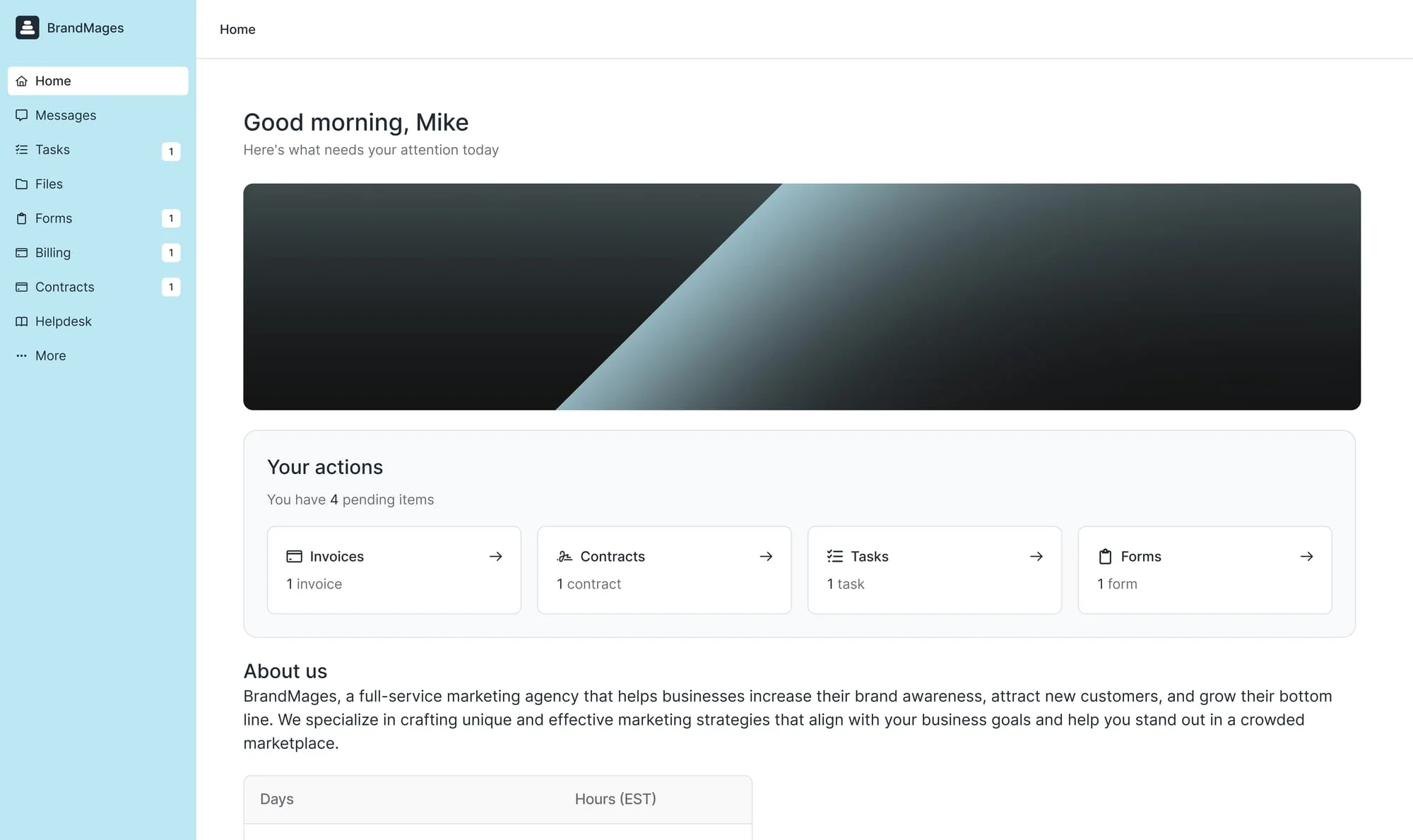
Assembly begins with a client workspace. The firm builds apps, pages, contracts, messages, files, billing, and a service store around each account. That fits firms whose clients need different apps. Choose it when building those apps matters more than starting with a set service path.
Choose Assembly when
You need custom apps for each client
Choose Assembly when client apps, contracts, custom homepages, permissions, and mixed types of work belong in one workspace.
Choose Wayfront when
The purchased service should run the account
Choose Wayfront when clients buy repeatable productized services and each purchase should trigger the right intake, SOP, delivery, and upsell workflow.
The operating difference in 3 parts
-
How money moves
Assembly: payment reconciliation routes through a Stripe Express dashboard and adds a 0.3% to 1.5% billing-method fee, depending on the plan and whether the client pays an invoice, subscription, or store purchase.
Wayfront: the agency connects its own Stripe or PayPal account. Wayfront sits on top of that account and adds no platform transaction fee to client revenue.
-
What gets customized
Assembly: a professional-service firm can assemble client apps, pages, contracts, files, forms, and billing into its own workspace.
Wayfront: productized agencies get a prebuilt service-to-intake-to-delivery flow, with source templates available when the client-facing pages need deeper changes.
-
What happens after delivery
Assembly: the client stays inside a configurable workspace with a service store, payments, files, apps, and messaging.
Wayfront: repeat purchases, client referrals, and connected reseller workspaces stay inside the same paid client account.
How Wayfront runs the paid service
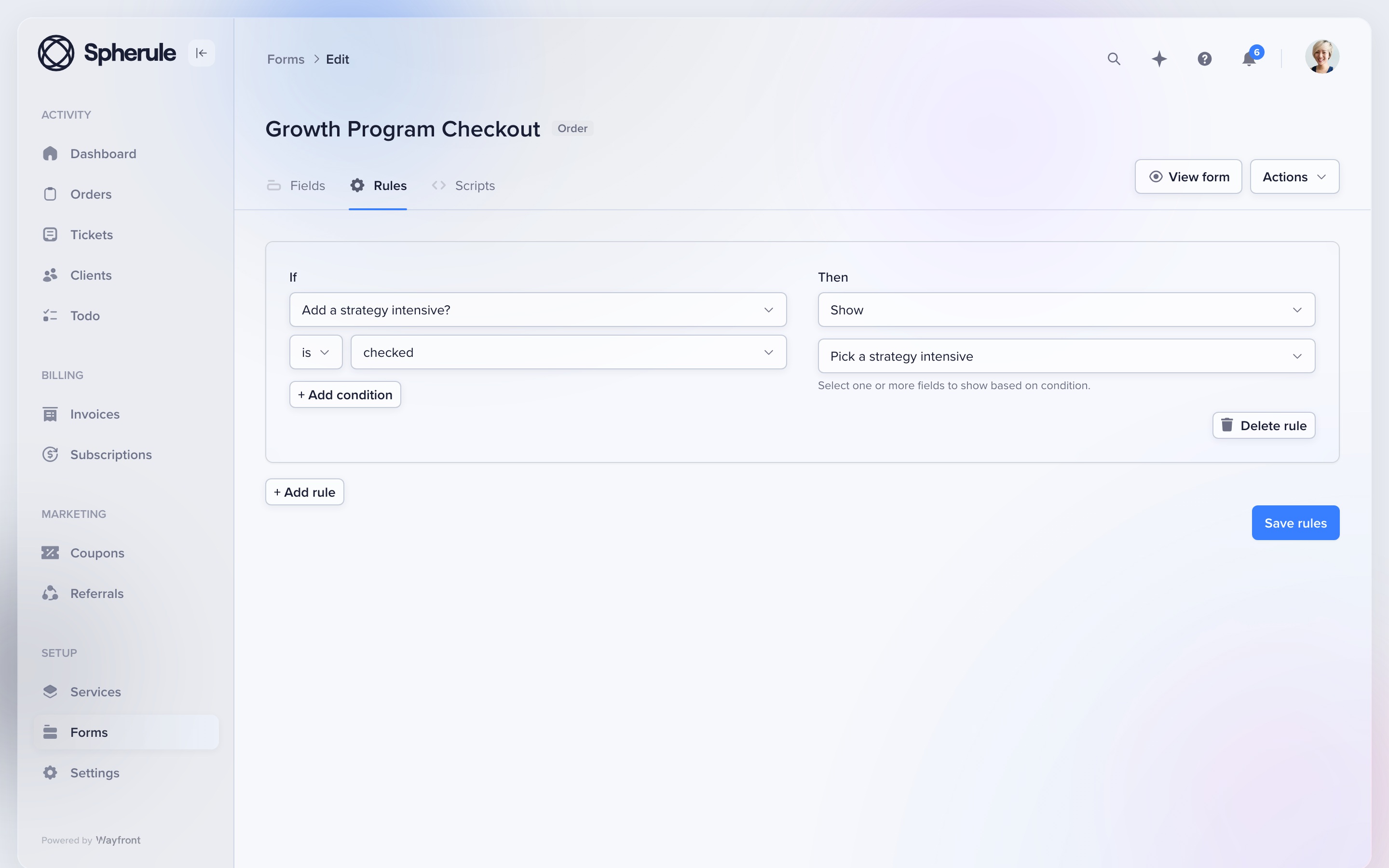
Wayfront starts at the service the client buys. Checkout creates the order, intake, access, and delivery context. The team does not rebuild that path for every new account.
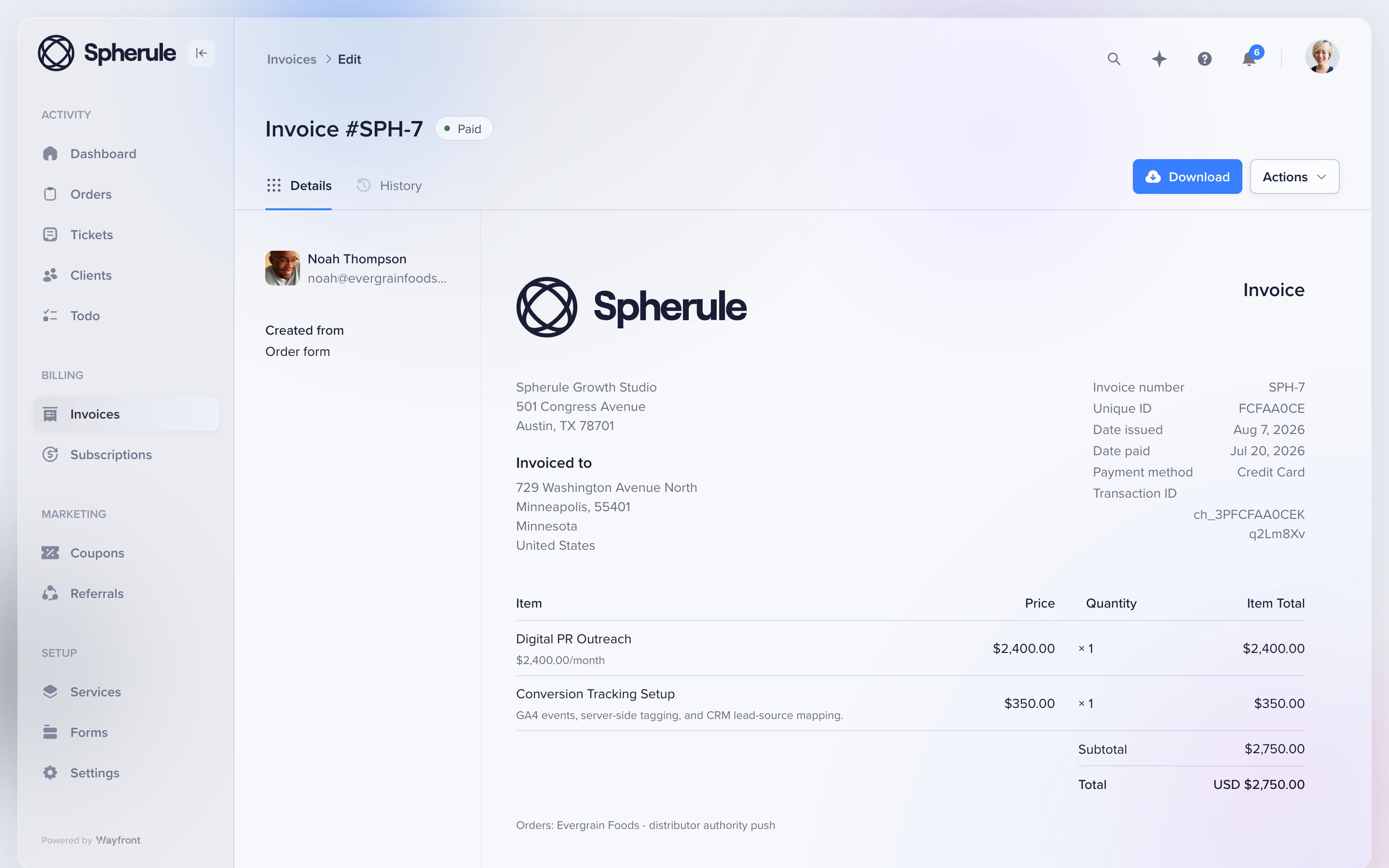
Payments land in the agency’s own Stripe or PayPal account. Wayfront adds no platform transaction fee on top of processing.
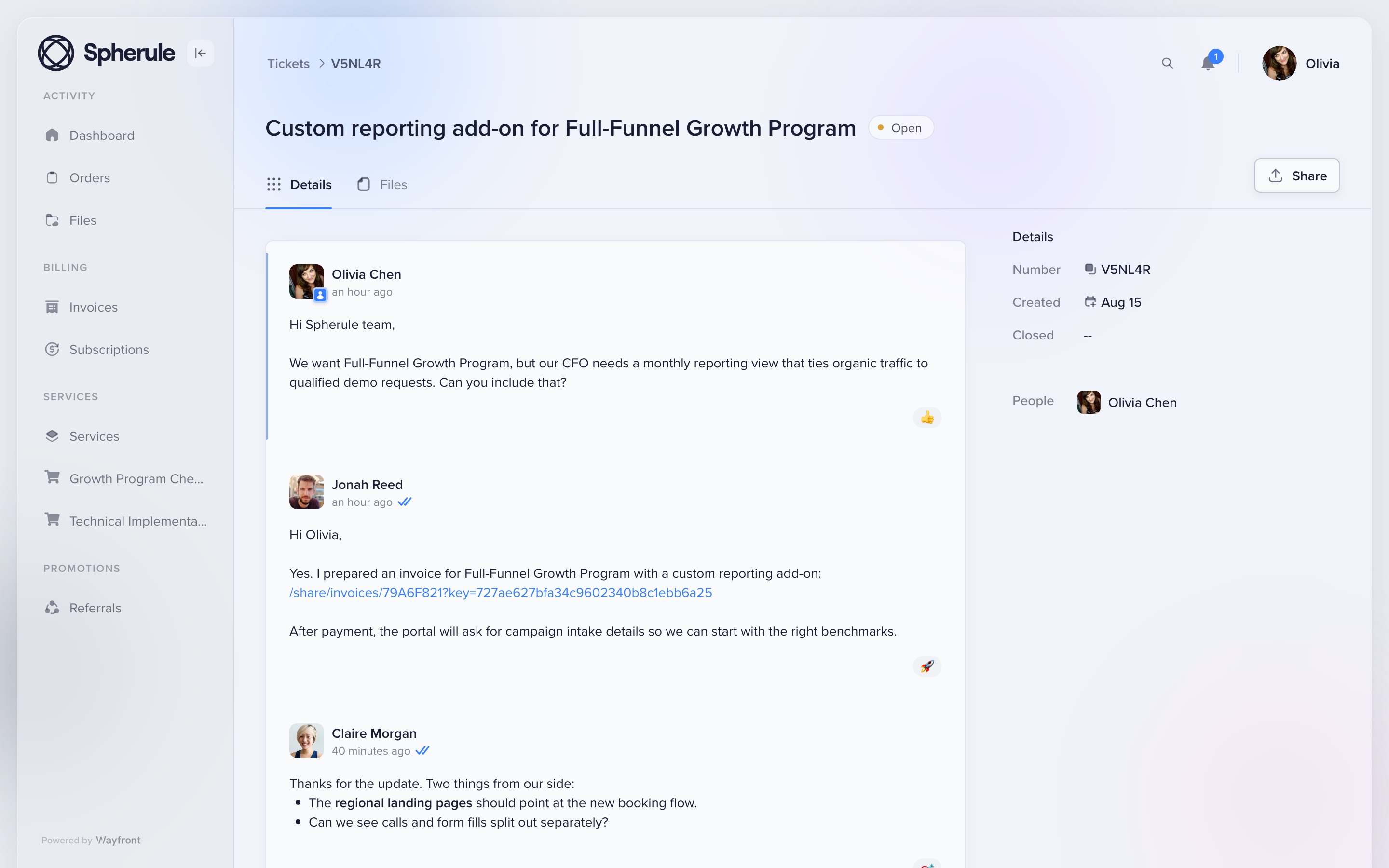
Email replies can return to the correct order or ticket. Clients can work in the portal or stay in their inbox.
Wayfront is the wrong choice when every engagement needs a custom proposal, or when the team needs deep resource planning inside the same product. Keep that work in a dedicated project tool. That matches the Post-AI Agency boundary: sell a defined result, keep the commercial record, leave production depth elsewhere if you need it.
Loganix moved after replacing 3 ordering systems and more than $80,000 in custom dashboards.
Full field guide: how Wayfront runs the paid service account.
The other 4 Assembly alternatives
SuiteDash
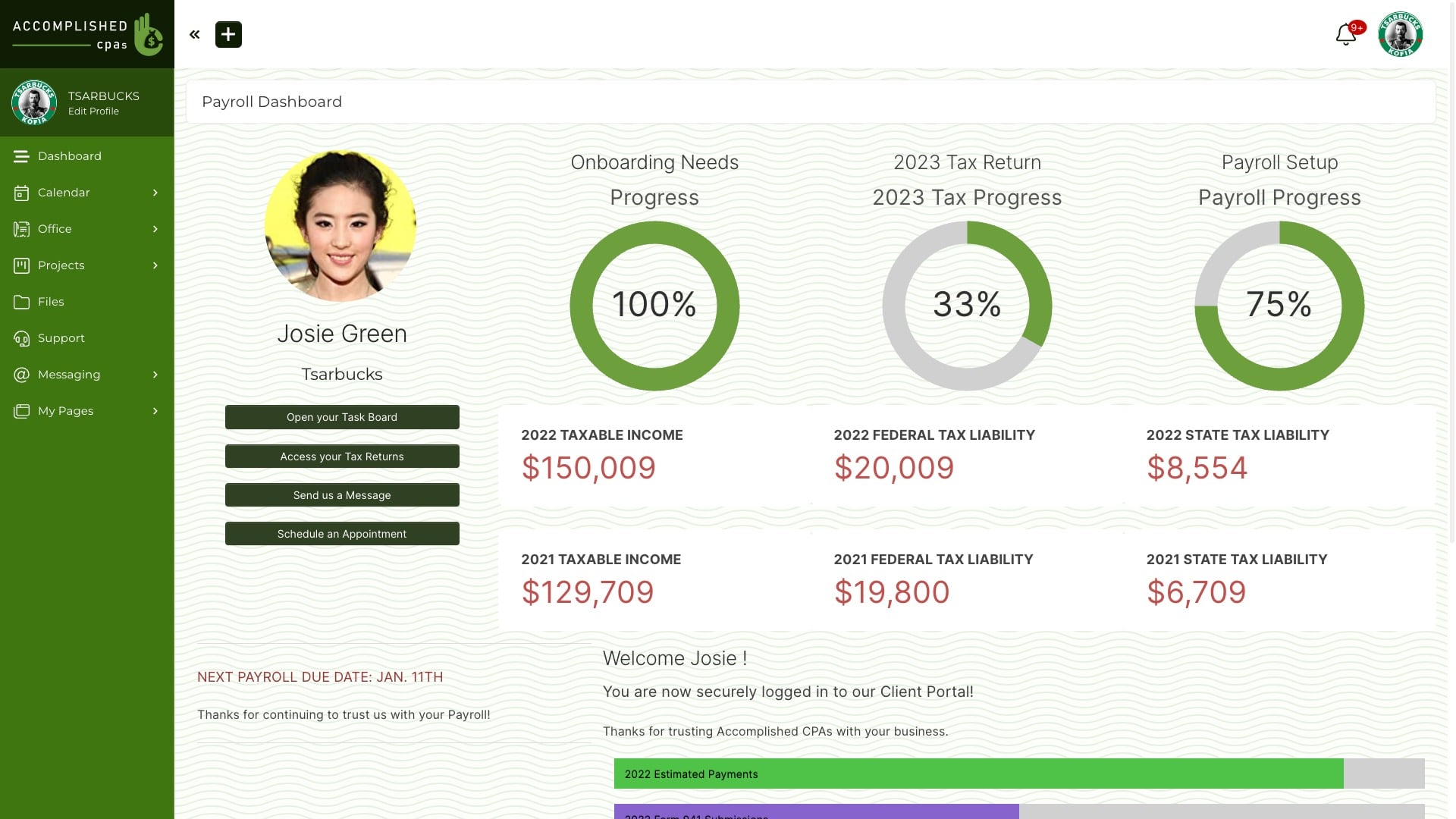
SuiteDash is a configurable back office for many industries. The operator connects CRM records, proposals, invoices, projects, templates, access rules, and automations. Choose it when replacing office tools matters most. The team has to build and maintain the link between each service and the client path. Full page: SuiteDash alternatives.
Dubsado
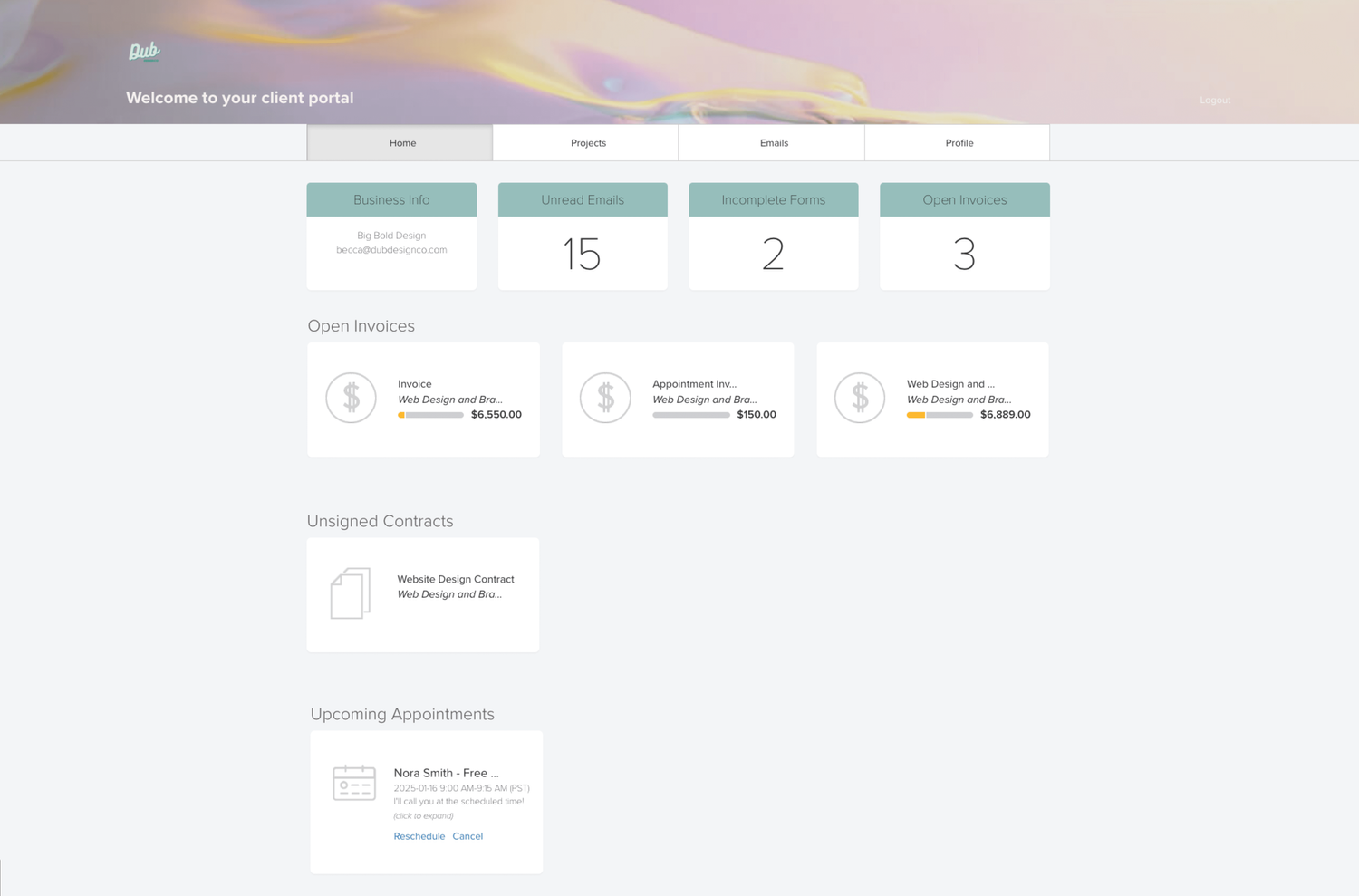
Dubsado takes a lead through booking, a proposal, contract, invoice, forms, and project rules. Choose it when each buyer needs a tailored booking journey. Once the same service can be sold repeatedly, the bespoke-first model adds decisions the agency no longer needs to recreate. Full page: Dubsado alternatives.
HoneyBook
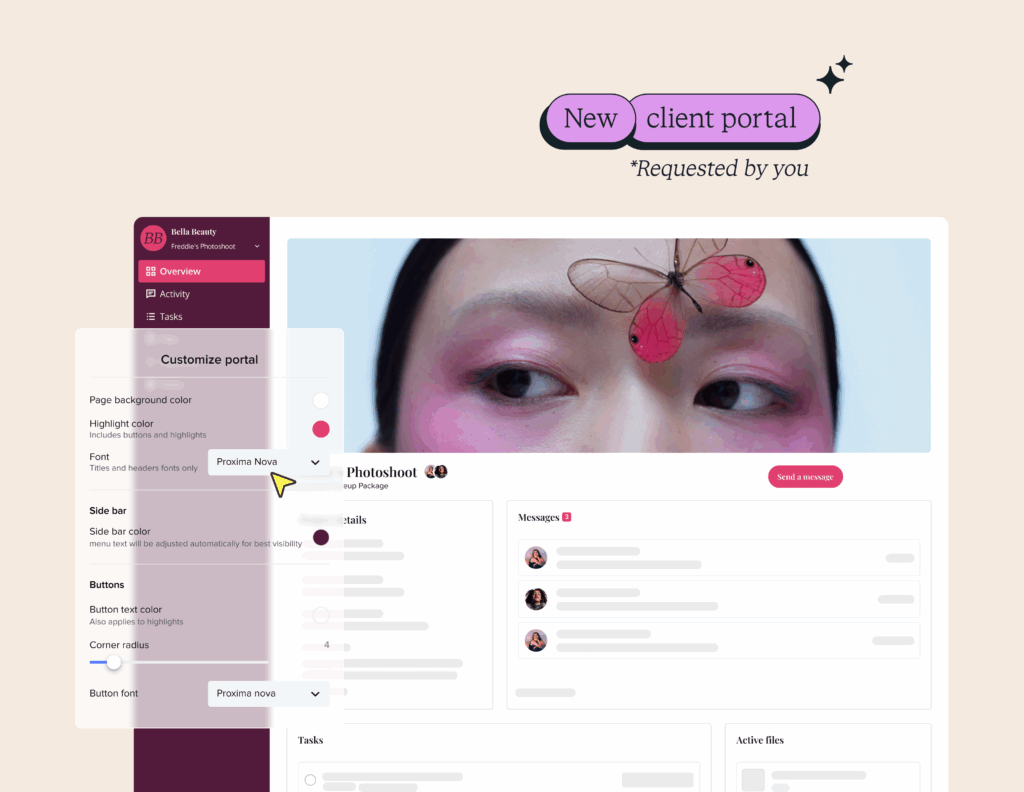
HoneyBook takes an inquiry through booking, a Smart File, contract, bill, payment, and project messages. Choose it when the business wins by qualifying and booking custom projects. A defined agency service needs a more direct path when clients should buy again without returning to a proposal-led sales process. Full page: HoneyBook alternatives.
Clinked
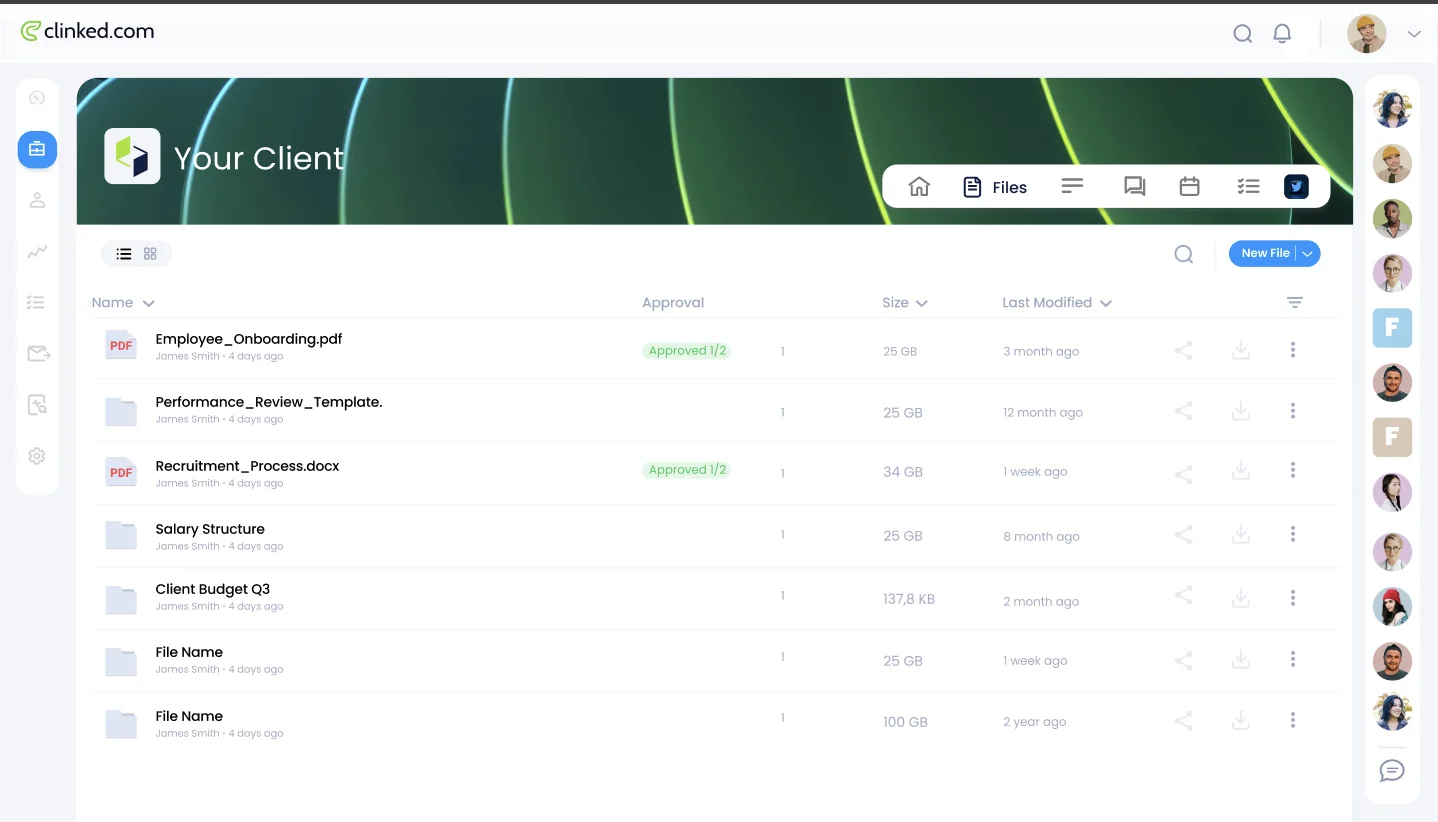
Clinked gives each client a secure group for files, messages, collaboration, permissions, and branded mobile access. Choose it when controlled document exchange is the main job. Selling a defined service, collecting payment, launching intake, and making the next sale still need a separate commercial layer. Full page: Clinked alternatives.
3 tests before you replace Assembly
-
Buy the same real service
Use the same scope, price, options, and intake for each option you are seriously considering. If a tool needs a separate checkout or delivery system, include it in the test and count every manual handoff.
-
Deliver one awkward request
Change scope, add a file, reply from email, ask for support, and issue a refund. Check which staff and client records keep the full history without a manual rescue.
-
Sell the next service
Ask the same client to buy again, renew, refer a buyer, or purchase through a partner. The second sale exposes whether the product runs a client relationship or only the first transaction.
How to switch without a big-bang migration
Rebuild and test 1 paid service first. Before moving clients, confirm what Assembly can export, whether active subscriptions and saved payment methods can move, and whether clients must authorize payment again. Run both systems through the first billing cycle, then move active clients before archived records.
Methodology
Assembly Pricing, Store, Payment Links, Client Portal, and Fees & Payment Reconciliation documentation reviewed August 2026. Public review profile: Assembly on G2.
See the category ranking in best client portal software.
Frequently asked questions
Can Assembly sell one-time and recurring services?
Yes. Assembly supports services, payment links, one-time purchases, subscriptions, and a public or client-only store. The larger choice is whether commerce should sit inside a configurable app workspace or whether the purchased service should organize the client account.
How do Assembly payment fees compare with Wayfront?
Assembly publishes a billing-method fee of 0.3% to 1.5% for invoices, subscriptions, and store sales, in addition to payment processing. Wayfront connects the agency’s own Stripe or PayPal account and adds no platform transaction fee to client revenue.
Can clients reply by email in both products?
Yes. Both products let clients reply from email. Test where replies land, how attachments behave, which client record keeps the thread, and whether the delivery team can act without copying the message into another tool.
Can subscriptions and saved payment methods move from Assembly to Wayfront?
Check payment data before you switch. Ask what Assembly can export. Find out if saved cards or live plans can move, and whether clients must approve payment again.
See the service-to-delivery path
Wayfront keeps the purchase, intake, delivery, and next sale on the same client account. Payments stay in your Stripe or PayPal account.
Build your workspace