
On this page
The short answer
The right client portal for a productized agency links the service, sale, intake, delivery, billing, and the next order. A file room or a help desk only covers one slice of that path.
Wayfront, Assembly, SuiteDash, Zendo, and Agency Handy can run that loop. Each product, price page, and help center was checked on August 25, 2026.
Wayfront is built for agencies that sell the same service again and want the client account to create more revenue. Assembly is a broad client workspace with Stripe Express payouts and added payment fees. SuiteDash asks you to join many business modules. Zendo runs delivery through requests. Agency Handy puts the portal next to internal projects and tasks.
Key points
- Wayfront grows revenue from paid client relationships through repeat purchases, prepaid packages, renewals, referrals, and reseller sales. Checkout starts fulfillment in the same system.
- Assembly charges more when the agency sells more. Starter adds a 1.5% billing-method fee to Store sales, before standard card processing, and reconciles payouts through Stripe Express.
- SuiteDash is a broad business toolkit. In our August 2026 visual review, its portal looked dated beside the other products. Productized agencies also have to build the service flow from separate modules.
- Zendo uses a client dashboard and request-led delivery. Agency Handy joins the portal with internal projects and tasks.
Best client portals at a glance
-
Wayfront
Best for: established agencies that sell repeatable services. Clients can buy again, renew, and refer new buyers. Partner agencies can resell services under their own brand. Payments land in the agency’s Stripe or PayPal account. Each sale starts the right work.
-
Assembly
Best for: firms that need to build custom apps for each client. Tradeoff: most plans cap active contacts, payouts reconcile through Stripe Express, and client sales carry a 0.3% to 1.5% billing-method fee.
-
SuiteDash
Best for: businesses that want one low-cost back office. Tradeoff: the agency must connect and maintain CRM, proposals, invoices, projects, files, portal pages, and automation. In our August 2026 review, the current interface looked dense and dated.
-
Zendo
Best for: service teams that want a storefront, client dashboard, and request-led delivery. Tradeoff: client work stays centered on request threads, and affiliate tracking requires a separate Rewardful or Tapfiliate subscription.
-
Agency Handy
Best for: agencies that want services, projects, tasks, billing, and support in one operations suite. Tradeoff: established agencies may outgrow its workflow depth around recurring intake, task handoffs, client permissions, billing exceptions, and account expansion.
How the products were evaluated
Each product, price page, and help center was checked on August 25, 2026.
The review followed 8 jobs: the first sale, intake, delivery, messages, a second sale, renewal, referral, and reseller order.
The shortlist excludes customer portal software made mainly for support, a client service portal limited to file exchange, and generic customer relationship management. Those tools serve other business needs, but they miss the paid-service journey measured here.
Plan limits and portal features matter when they change buyer ownership or the client experience. The review checked unlimited users, mobile access, cloud storage, the support team, and whether staff must manage tasks across other tools. Check the final price before you buy.
The review also checked whether AI can use the workspace. A product needs a supported CLI, an MCP server with live data and actions, or an assistant that can do real work. APIs, webhooks, Zapier links, and text writers sit one level below that bar.
Public review profiles used as a second check: Assembly on G2, SuiteDash on G2, Zendo on G2, and Agency Handy on G2. Those pages were used to find questions. Material claims were then checked against first-party product and pricing docs.
1. Wayfront: productized-service software built around client revenue
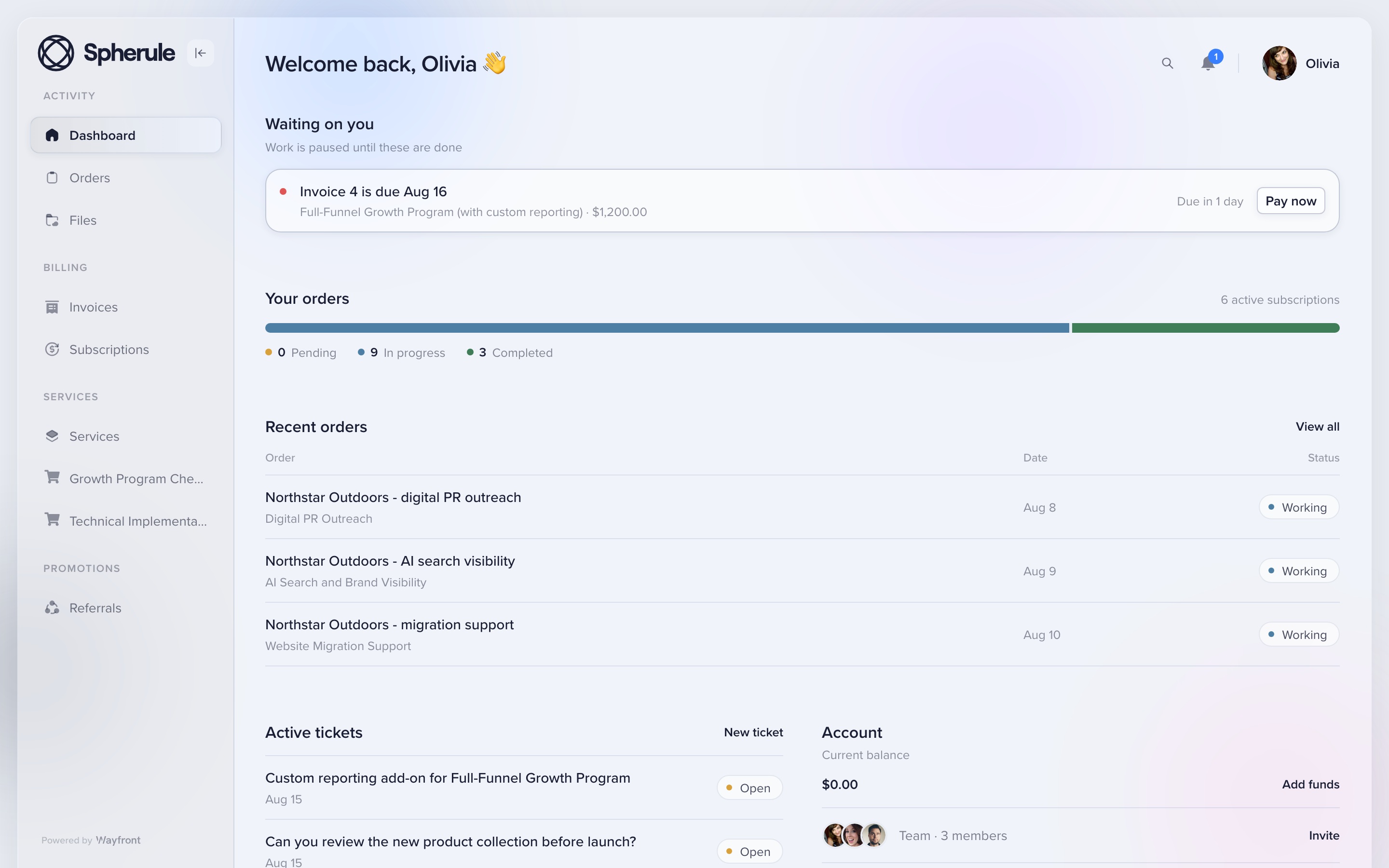
Wayfront is built to sell repeatable services and carry each sale into delivery. Clients can buy again without another sales call. They can renew, use prepaid packages, or refer a new buyer. Partner agencies can resell services through their own branded workspace. The sale, intake, files, work, billing, and support stay in one client account.
Turn the sale into a client account
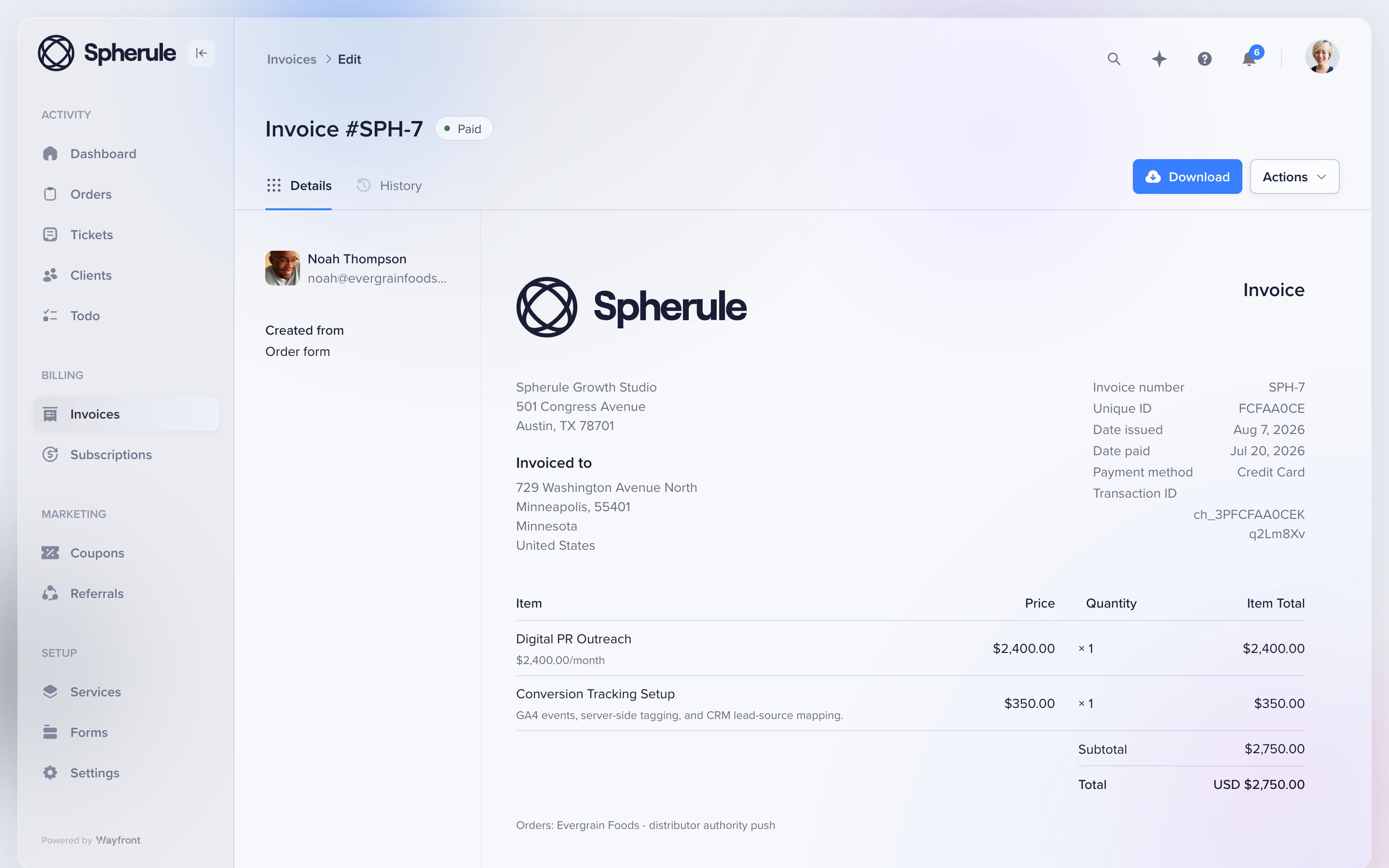
A paid service keeps the client, line items, bill, and service context together. This redesigned invoice shows a recurring digital PR service and conversion-tracking add-on in one record. The agency connects its own Stripe or PayPal account, so client payments stay in the account it controls.
Collect the right intake after purchase
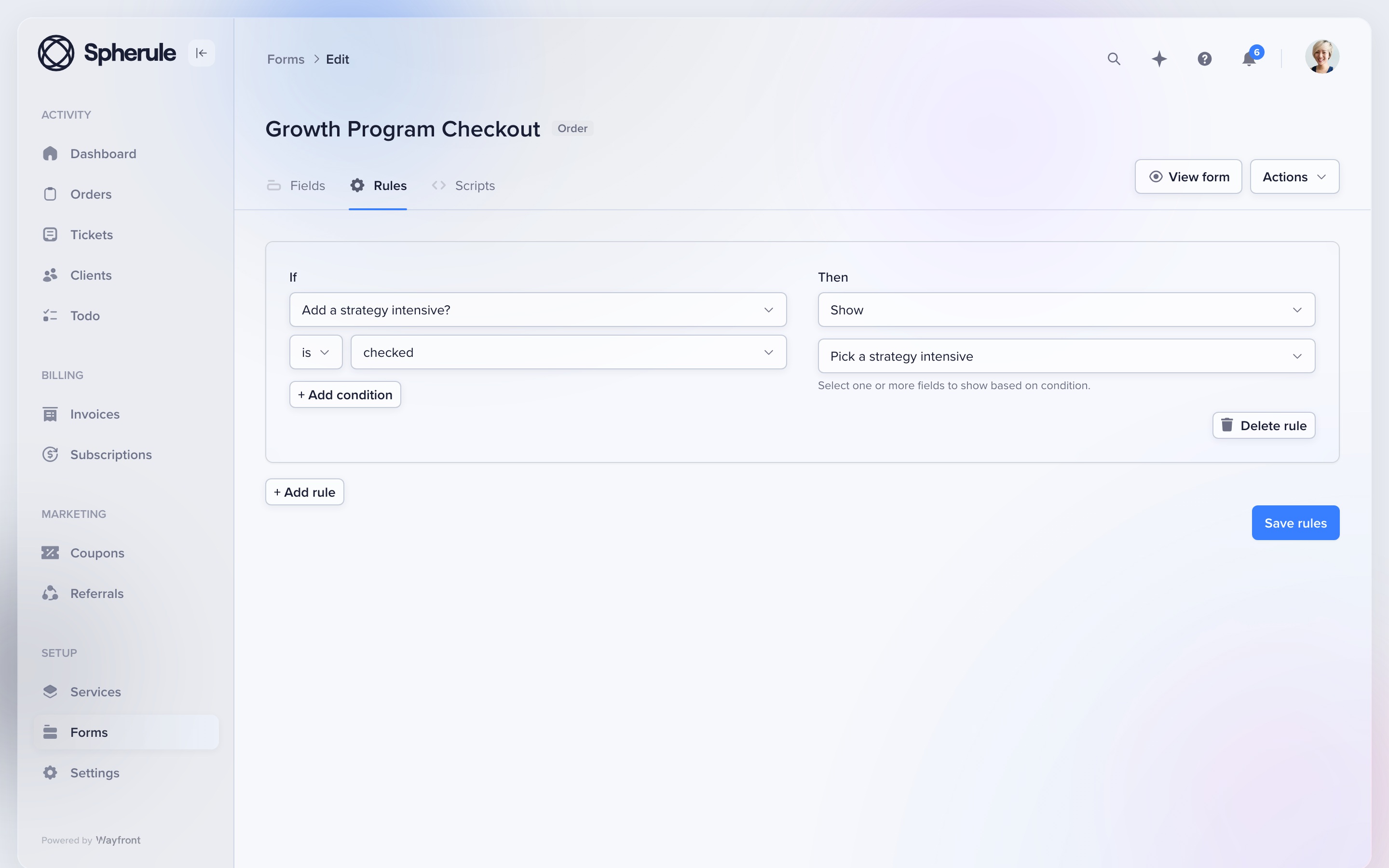
Attach the correct intake form and rules to the service. A client who buys local SEO should see different questions from a client who buys podcast editing, without the team rebuilding onboarding by hand.
Keep the client conversation attached to paid work
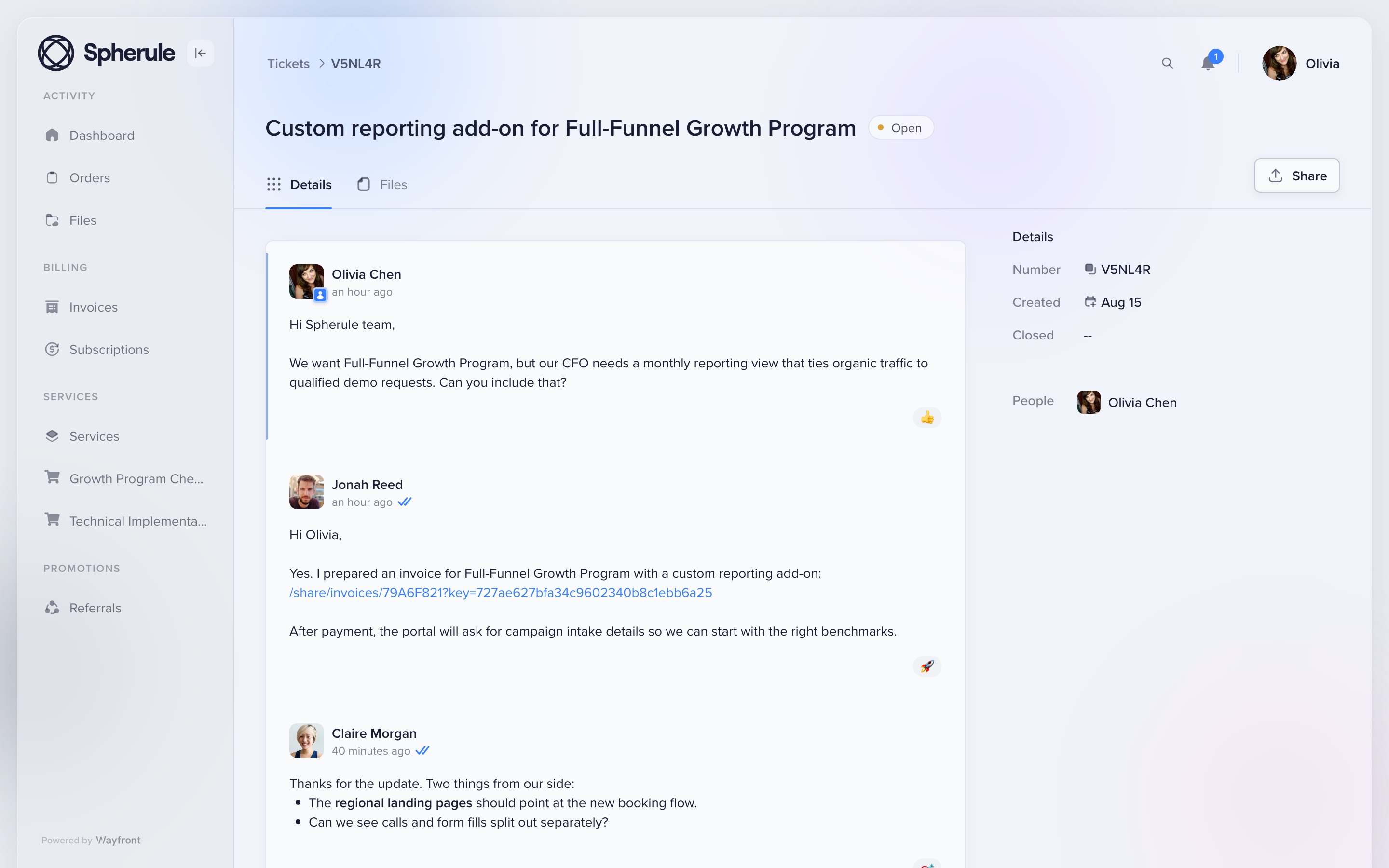
Clients can use the portal or reply from email. This redesigned portal thread shows the conversation inside the client account, while each reply returns to the correct order or ticket.
Make the next sale easier
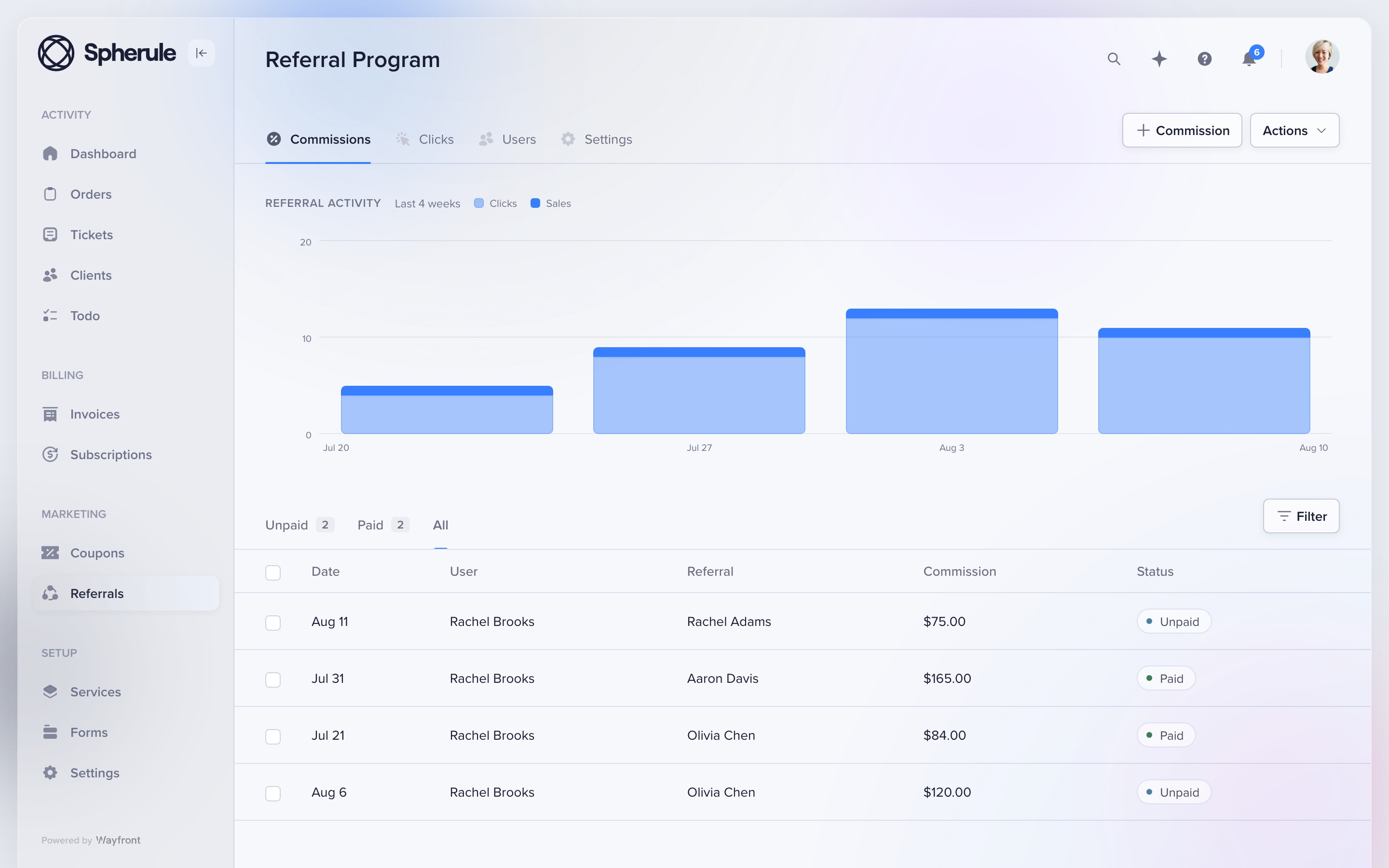
The account stays useful after delivery. Clients can buy again or refer a buyer. Approved partners can resell services through their own branded workspace.
Loganix moved its seven-figure agency to Wayfront after replacing 3 ordering systems and more than $80,000 in custom dashboards.
Where Wayfront stops
Wayfront is built for repeatable services. Custom work that starts with a proposal needs its own sales process. Keep a project tool when the team needs deep task plans, workload views, staff schedules, or detailed SOPs.
That boundary matches the Post-AI Agency model: sell a clear result, keep the client record, and make the next project easy to buy. Proposal-led custom work still needs a separate sales path.
AI operability and portal control
AI operability: Wayfront documents all 3 layers: a workspace CLI, an MCP server for external agents, and a built-in assistant that can read live workspace context and preview changes for confirmation. That is the same idea as the AI for agencies guide: connect the model to a bounded workflow and a current client record.
Pricing
Pricing: Base is $129 per month or $99 per month billed annually. Pro is $299 per month or $249 per month billed annually. Plus uses custom pricing. Check Wayfront pricing.
Full field guide: how the purchased service runs the client account.
2. Assembly: broad client software that controls the payment flow
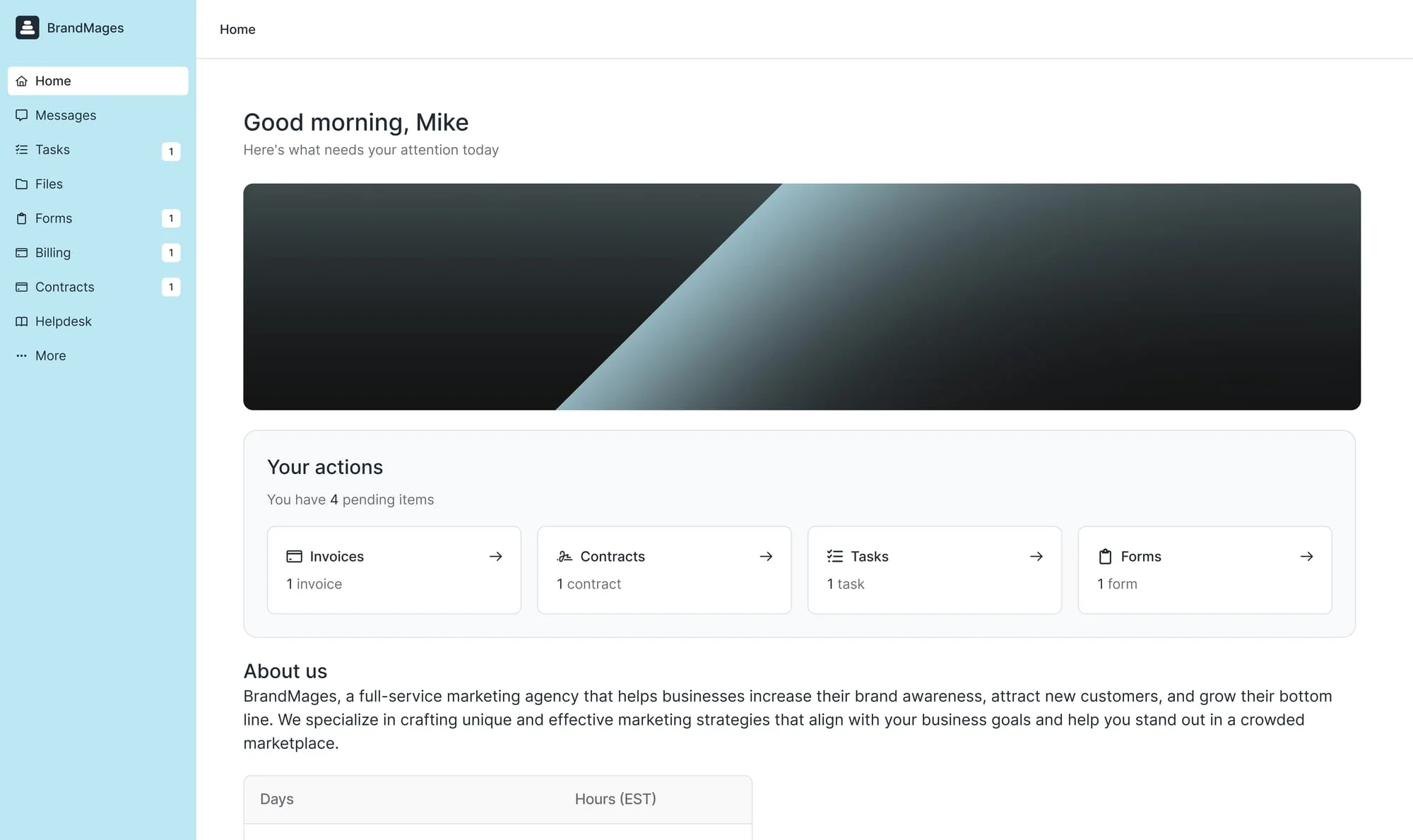
Assembly, formerly Copilot, is a broad client workspace for many types of service business. It joins messages, billing, contracts, files, forms, tasks, CRM, rules, and apps. Its store can sell a service and start intake. The payment flow uses a separate Stripe Express account, and Assembly charges more as the agency sells more.
Where Assembly fits best
Service firms that value a custom client workspace more than control of their payment account.
Payment-account control and sales-linked fees
- Assembly Store payments use its Stripe Connect flow and pay out through a separate Stripe Express account. The agency does not use its existing Standard Stripe account for that flow.
- Its billing-method fee sits on top of base processing and cannot be passed to the client. Starter adds 0.5% to invoices, 0.9% to subscriptions, and 1.5% to store sales. Professional adds 0.4%, 0.7%, and 1%.
- Starter caps the CRM at 50 active contacts and Professional at 500. Assembly defines an active contact as a client record that can sign in, so the number of client logins can force a plan change even when the delivery team stays the same size.
- Assembly’s affiliate plan pays users for selling Assembly. In the public product documentation we reviewed, we found no native referral program for an agency’s own services.
Assembly AI operability
AI operability: strong. Assembly has a remote MCP server that reads and writes across much of the workspace, plus a built-in assistant for client analysis, messages, invoices, notes, and tasks. No first-party workspace CLI was found.
The fee math: at $10,000 in monthly card sales through a Starter Store, Assembly charges a $150 billing-method fee before the standard 2.9% + $0.30 card processing charge. At $100,000, that fee becomes $1,500. Assembly gets paid more every time the agency succeeds.
Wayfront sends payments directly to the agency’s own Stripe or PayPal account and adds no platform transaction fee. Wayfront also turns the client relationship into a growth channel through native repeat purchases, renewals, agency referral programs, and connected reseller workspaces.
Full breakdown: Assembly alternatives for agencies.
Pricing: billed annually, Starter is $29 per month, Professional is $99 per month, and Advanced is $499 per month. Starter is $49 when billed monthly. Enterprise uses custom pricing. Payment processing, billing-method fees, and extra users can increase the total.
3. SuiteDash: a Swiss Army knife that still looks like back-office software
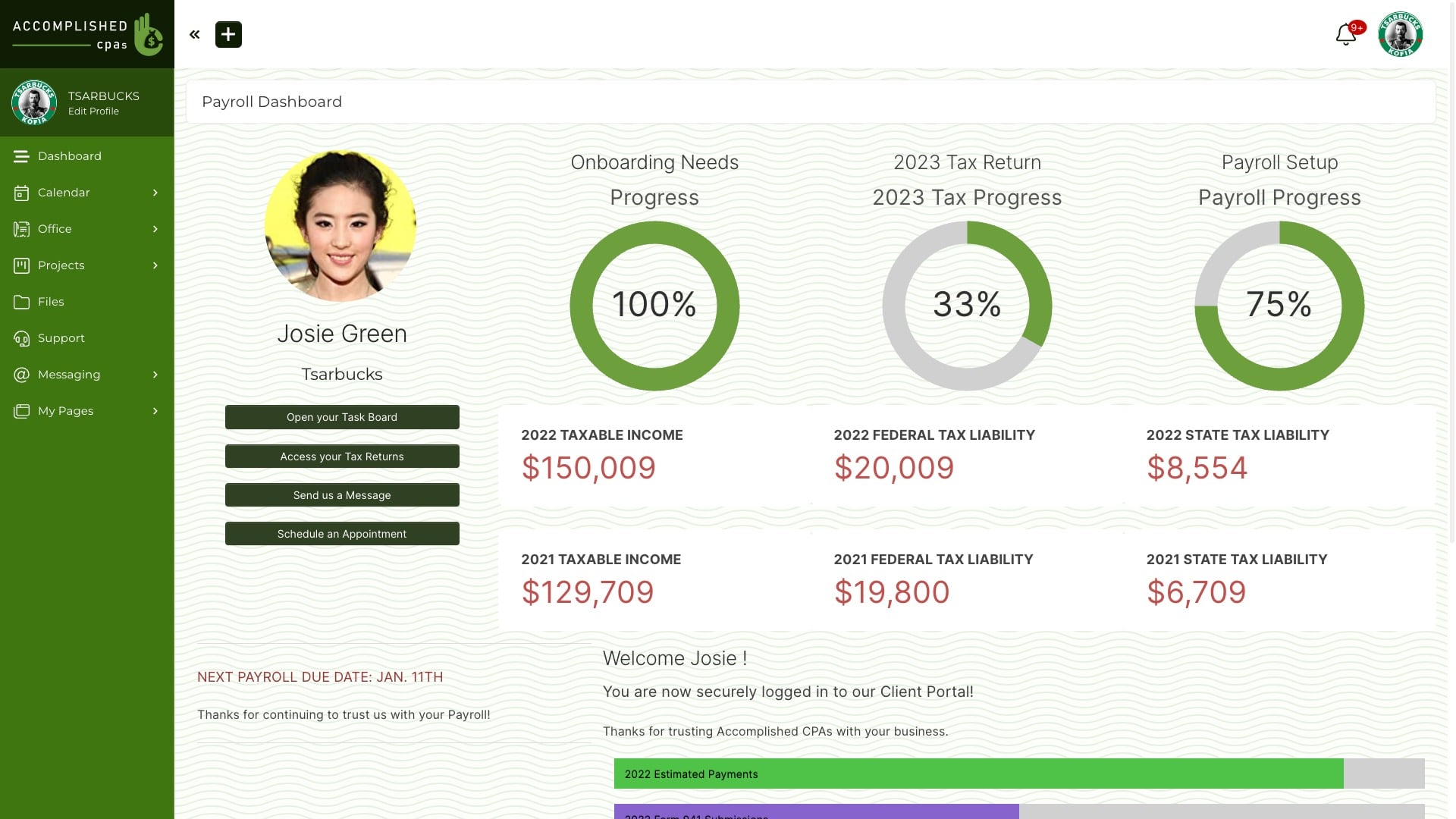
SuiteDash is a broad business toolkit sold across many fields. In our August 2026 review, its portal looked like back-office software beside the other products. A productized agency must still join forms, prices, plans, rules, projects, and portal pages into one sales and delivery flow.
Where SuiteDash fits best
Service firms that want many back-office tools in one product and can accept a dated portal.
Generic modules and a dated client experience
- SuiteDash gives the business many separate tools. The agency must join forms, prices, packages, plans, projects, portal pages, and rules into the service flow it wants. The team owns those connections and their upkeep.
- Billing and repeat projects use separate setup. The agency must write the rules that link a paid renewal to the right work and request limit.
- SuiteDash’s partner program resells white-labeled SuiteDash accounts. That is a software-reseller business. Wayfront’s reseller mode lets another agency sell the provider’s productized services at its own price while the provider fulfills the order.
SuiteDash AI operability
AI operability: limited. SuiteDash documents a built-in Platform Assistant for setup guidance, plus content generation and bring-your-own-model support. No public MCP or product CLI was found. There is also no proof that the assistant can run client, billing, and delivery work.
SuiteDash gives the agency a large box of business modules. The agency has to design and maintain the links among checkout, billing, access, projects, support, and renewals. In our current visual review, the portal still looked like back-office software.
Wayfront makes the purchased service the center of the system. Checkout creates the order, intake, access, and delivery workflow. A renewal can reopen the order, create another order, or reset request allowances. Referral and reseller revenue also lands in the same service-commerce model.
Full breakdown: SuiteDash alternatives for agencies.
Pricing: Start is $19 per month, Thrive is $49 per month, and Pinnacle is $99 per month. Annual plans lower the effective monthly cost.
4. Zendo: a request-first client portal
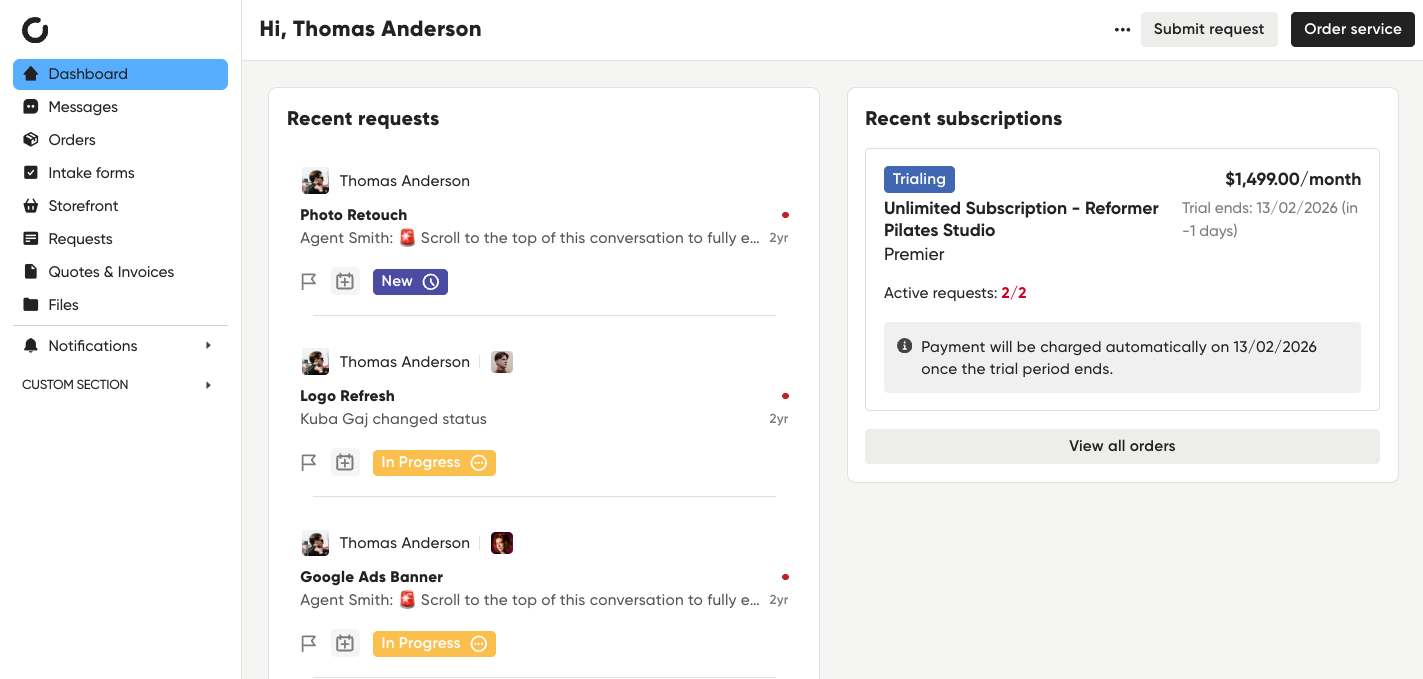
Zendo gives each client a persistent dashboard across orders, requests, subscriptions, messages, documents, files, and the storefront. Delivery still runs through requests with chat, status, files, forms, dates, and checklists. The real question is whether that request queue matches how the agency serves clients.
Where Zendo fits best
Service teams that want a storefront, client dashboard, and request-led delivery.
Logged-in dashboard and request-led delivery
- Zendo centers the client experience on an account and real-time request chat. Its documentation says clients need an account to submit requests, order services, chat, or perform actions in the portal.
- Built-in request automation can change a status, send a message, or send an intake form. Zendo also links orders, subscriptions, documents, files, and messages through the client dashboard.
- Branding covers the logo, color, login pages, sidebar, chatbot, custom web and email domains, and badge removal by plan. No documented source editor for the client portal was found.
- Zendo connects Rewardful or Tapfiliate, and each needs its own plan. Wayfront keeps referral links, rewards, coupons, and account credit inside the portal.
- No documented connected reseller-workspace model was found where another agency sets its own price, sells the provider’s service under its brand, and routes the order back for fulfillment.
Zendo AI operability
AI operability: unscored. The public docs were insufficient to verify a product CLI, MCP server, or built-in work agent.
Zendo keeps a persistent client dashboard and makes requests the center of delivery. Wayfront makes native referrals, reseller workspaces, support, and repeat purchases part of the paid service account. Each product gives the client system a different job.
Wayfront gives clients the portal and email as two interfaces to the same work. Email can create a ticket or reply to the correct order or ticket thread. Repeat purchases, renewals, referrals, and reseller sales remain native to the client relationship.
Full breakdown: Zendo alternatives for agencies.
Pricing: Essential is free. Core is $29 per month, Pro is $59 per month, and Agency is $99 per month. Annual billing lowers those prices.
5. Agency Handy: client portal plus internal agency operations
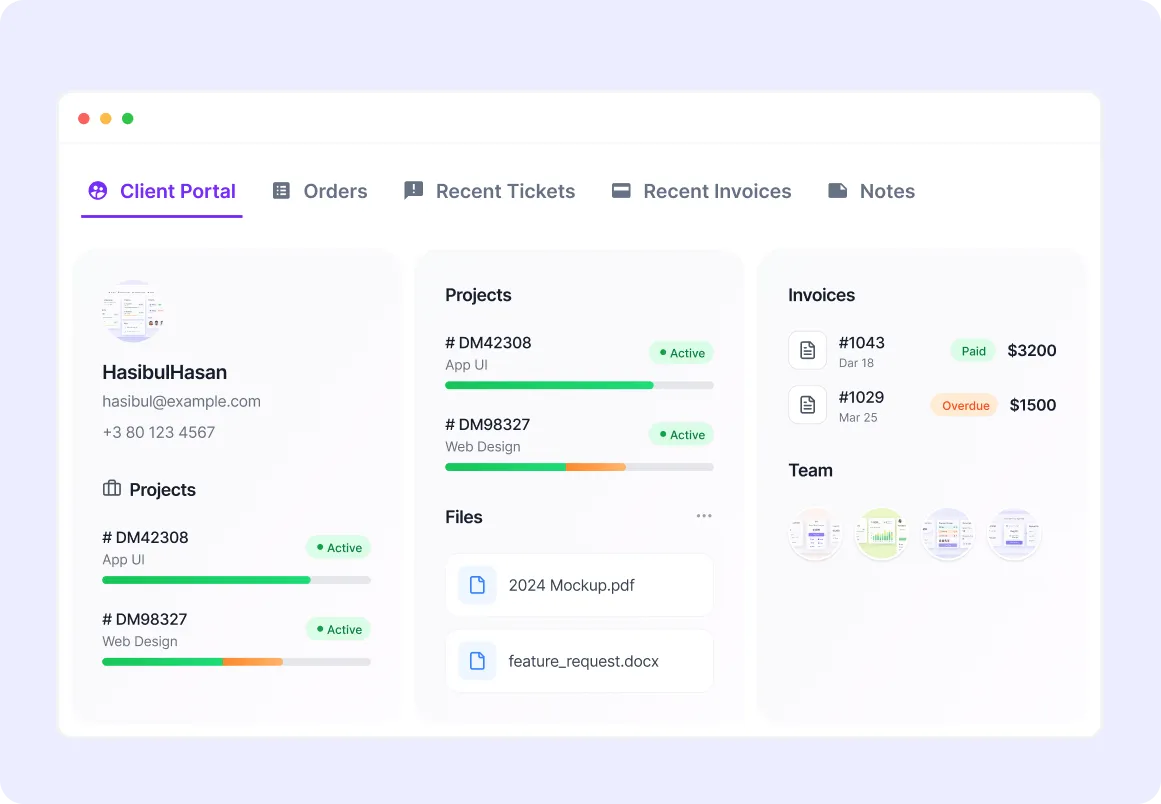
Agency Handy combines leads, services, orders, intake, projects, tasks, billing, tickets, files, and feedback. It fits an agency that wants the portal and internal project work in one suite. Wayfront is narrower. It focuses on the paid service, client communication, support, repeat sales, referrals, and reseller revenue.
Where Agency Handy fits best
Agencies that want one suite for the client portal and internal project work.
The operating-model tradeoff
- Agency Handy gives one suite ownership of CRM, services, projects, tasks, billing, files, tickets, and the client portal. Wayfront leaves detailed production to a specialist tool and focuses on the commercial client account.
- Agency Handy leads with service sales, projects, tasks, billing, and support. Wayfront leads with set services, client referrals, and reseller workspaces.
- Agency Handy offers logos, colors, domains, branded email, sidebar controls, embeds, and scripts. Wayfront Pro exposes the source templates behind client-facing pages. Build one awkward account in both products and test the change you actually need.
Agency Handy AI operability
AI operability: partly verified. Agency Handy marks an MCP server as completed on its public roadmap. No public tool-level documentation proves its actions, permissions, audit trail, or client-data boundaries, so those capabilities stay unscored.
Agency Handy joins the client portal with CRM, projects, tasks, billing, files, and support. Wayfront gives the paid service and commercial client account a focused layer while internal production can remain elsewhere.
Wayfront already connects growth and delivery. Clients can buy again and refer buyers. Partner agencies can resell services from a connected branded workspace while the provider receives the order, fulfills it, and gets paid automatically.
Full breakdown: Agency Handy alternatives for agencies.
Pricing: Freelancer is $29 per month, Team Starter is $99 per month, and Business Pro is $199 per month. Confirm current limits directly with Agency Handy before purchasing.
The consequential differences
How the client account creates more revenue
The first checkout is table stakes. The right client portal software should support the full client lifecycle. Ask what makes the next sale easy. Wayfront includes repeat orders, prepaid packages, renewals, client referrals, and reseller workspaces.
Zendo runs work through requests and connects outside affiliate tools. Agency Handy joins the portal with internal agency work. Assembly centers on a custom client workspace. SuiteDash asks the team to build the flow from broad business modules.
Who owns the portal and the conversation
A branded client portal starts with the logo, custom domain, login page, and brand identity. Then test the communication channels. Wayfront Pro exposes the source templates behind client-facing pages, and email replies return to the correct order or ticket. Zendo makes requests the center of delivery. Agency Handy combines the portal with internal project work. In our August 2026 visual review, SuiteDash still looked like back-office software.
Invite external clients and the internal team. Ask each person to find current work, access files, share files, send a message, and locate support. The best portal software gives every role a dedicated space while keeping customer interactions on the correct account.
Can AI work inside the portal?
A useful AI gate asks whether the system can read live client and work data, take allowed actions, show an audit trail, and fit how the team works. APIs, webhooks, Zapier links, automated workflows, knowledge base tools, and text writers solve different jobs. The AI client management guide covers why that record has to live in one place.
- Wayfront: workspace CLI, MCP, and a built-in operational assistant.
- Assembly: its current pricing and product docs list an MCP connector and built-in AI tools.
- Agency Handy: its public roadmap marks an MCP server as complete, but public tool-level documentation was not enough to score what it can safely do.
- SuiteDash: it documents in-product assistant and writing tools.
- Zendo: we left it unscored because the public product docs were not enough to verify an agent interface.
Wayfront documents all 3 layers. Staff can use live client, payment, and work data inside the product. Outside agents can use MCP, and scripts can use the CLI. Missing public proof stays unscored.
How billing works
Look beyond a payments checkbox. Wayfront uses the agency’s Stripe or PayPal account and adds no platform fee. Assembly uses a separate Stripe Express payout account and adds fees the agency cannot pass on. Account control affects cost, payouts, refunds, disputes, and what happens when the agency leaves.
How pricing scales with the team
The headline price hides different limits. Compare active clients, staff, storage, and the tools inside each paid plan. Zendo includes 1 staff user on every paid plan. Assembly caps active contacts at 50 on Starter and 500 on Professional. It also adds billing-method fees that rise with client sales.
Wayfront includes 5 seats and unlimited clients on Base. It adds no platform transaction fee. SuiteDash uses flat plan pricing with unlimited staff. Agency Handy prices by plan and team size.
A free plan can help with a test account. Enterprise plans can add security, controls, and custom support. Run the real client and team numbers through the plan you would actually buy.
Security, access controls, and data ownership
A client portal can hold contracts, bills, payment history, files, and private messages. Secure access matters as much as appearance. Check encryption, two-factor login, access rules, staff and client roles, audit logs, session controls, and data exports. Ask each vendor to show what a client, contractor, employee, and admin can see. Then remove a user and make sure access ends everywhere.
Match security features to the agency’s real risk. A creative studio may need secure file sharing, secure file storage, and simple file management. Health, finance, and legal professional services may need tighter controls, data-retention rules, and proof of compliance. A generic security page is only a starting point. Write the rules down in an agency AI policy if models will read those records.
When another operating model fits better
These 5 products are the closest client portal solutions for repeatable services. Pick a different type of tool when another job matters more:
- HoneyBook and Dubsado fit small firms that sell custom projects through proposals, contracts, and invoices.
- Bonsai fits teams that need a project management tool, task management, task tracking, and project economics.
- Clinked fits teams that mainly need safe file sharing and private client workspaces.
- HighLevel fits agencies that want to resell marketing software and CRM automation to clients.
Which client portal should you choose?
- Choose Wayfront when one client account should lead to repeat sales, renewals, referrals, and reseller orders. Each sale should start the right work.
- Choose Assembly when a custom client workspace matters more than control of the payment account, and added sales fees fit the business.
- Choose SuiteDash when broad administrative coverage matters most and the team is prepared to build the service flow from separate business modules.
- Choose Zendo when a storefront, client dashboard, and request queue should run the client experience. Its affiliate programs use Rewardful or Tapfiliate.
- Choose Agency Handy when one suite should own the client portal, CRM, projects, tasks, billing, files, and support.
Run 3 tests before choosing a client portal
-
Buy a real service
Publish the offer, pay, complete intake, and confirm the right client access and delivery context appear without a manual rescue.
-
Deliver an awkward request
Change scope, add a file, reply from email, ask for support, issue a refund, and check which staff and client records keep the history.
-
Sell the next service
Ask the same client to buy again, renew, or refer a buyer. If the platform makes the first checkout easy but the second sale awkward, it has not solved the whole client relationship.
Move one active service first
Keep open projects in the current system. Rebuild one proven service with its offer, payment, intake, client access, messages, files, and billing history. Run the old and new paths through one full delivery and billing cycle. Move more accounts only after the first client can buy, receive the work, get help, and buy again without a manual rescue.
Methodology
We checked product names, features, and public prices on August 25, 2026. We kept a competitor limit only when Wayfront handles the same job in a different way. We update this guide when a vendor makes a major product or plan change. Check current terms before you buy.
Sources: first-party product, pricing, and help pages for each vendor, plus the G2 review profiles listed above. Third-party reviews were used to find questions, not as proof of a capability.
Frequently asked questions
What makes a client portal suitable for productized services?
A suitable portal connects a defined service and price with checkout, intake, fulfillment, client communication, billing, and repeat orders. File sharing and messaging alone cover only part of that lifecycle.
Does client portal software replace Stripe?
The answer depends on the platform. Wayfront builds on the agency’s existing Stripe or PayPal account. Other products may use a different processor or merchant model. Verify payment ownership, payout timing, subscriptions, refunds, taxes, and export access before choosing.
Can I migrate from my current stack?
Migration depth varies by product and data type. Ask each vendor to demonstrate imports and exports for clients, services, invoices, subscriptions, files, conversations, and project history. Test a representative client before moving the full account.
How should I measure the return on a client portal?
Record the time spent on sales handoffs, intake follow-up, status updates, invoice follow-up, file requests, and support before launch. Compare those numbers after adoption. Treat revenue and retention improvements as hypotheses until your own data proves them.
See the service-to-delivery path
Wayfront keeps buying, intake, delivery, messages, approvals, renewals, repeat sales, referrals, and reselling in the same client record.
Build your workspace