
On this page
The short answer
Keep Zendo when the request thread should run delivery. Move when the next purchase, a referral, or a reseller order should sit on the paid account. Wayfront is built for that. Assembly, Agency Handy, SuiteDash, and Clinked cover apps, an ops suite, a toolkit, and a file room.
Choose Zendo when the storefront, dashboard, and request conversation should stay at the center of client work. Choose Wayfront when the agency wants native referrals and reseller workspaces beside services, support, and repeat purchases.
Stacks to weigh against Zendo
Wayfront
Best for: agencies that want native referrals and reseller workspaces beside services, support, and repeat purchases.
Assembly
Best for: firms that need to build custom apps for each client. Store sales add a billing-method fee and pay out through Stripe Express.
Agency Handy
Best for: agencies that want services, projects, tasks, billing, and support in one operations suite.
SuiteDash
Best for: businesses that want one low-cost back office and can accept a dated portal.
Clinked
Best for: secure files, client workspaces, permissions, and branded mobile access.
Both products keep a client account, but they grow it differently
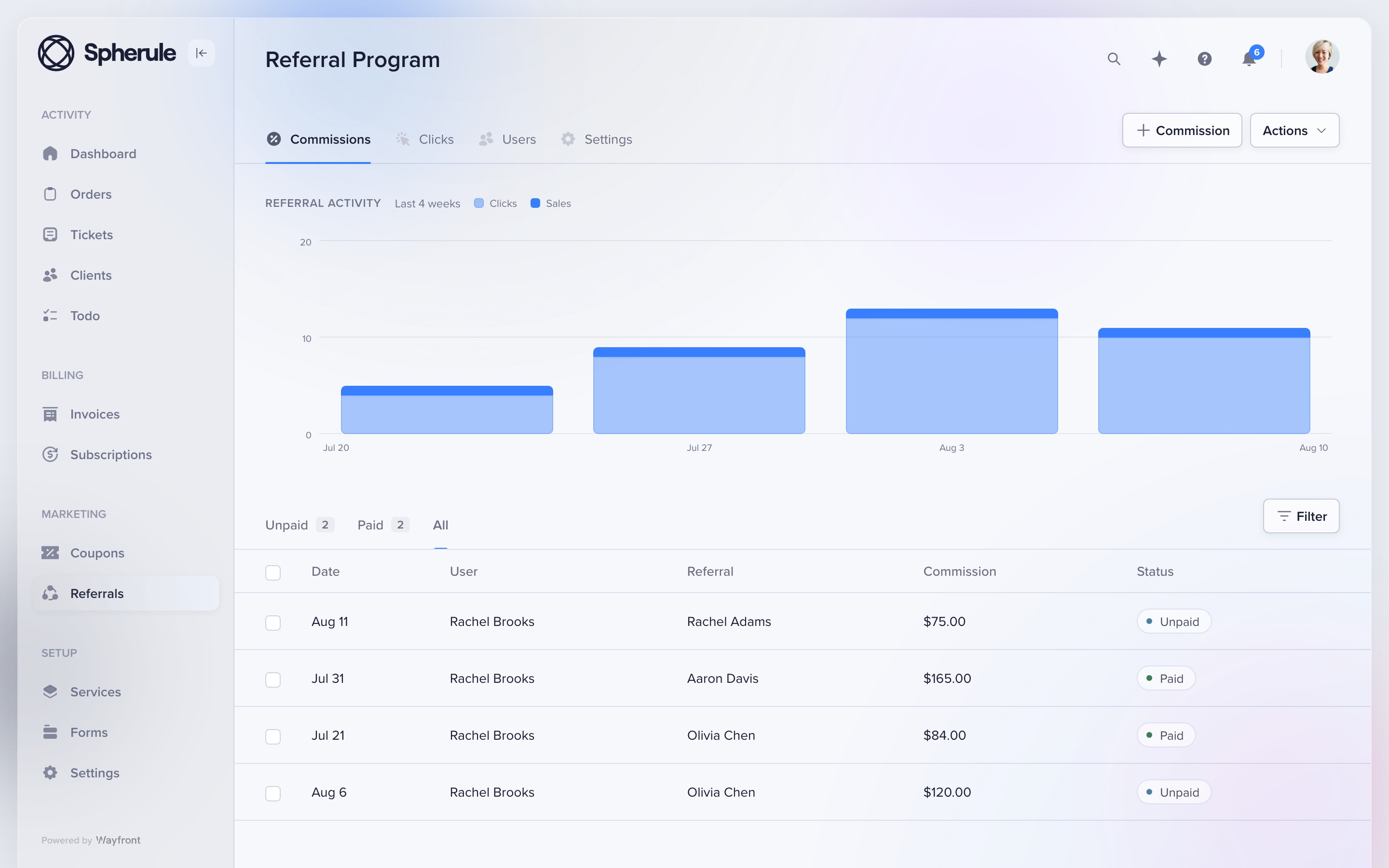
Zendo gives each client a dashboard for orders, requests, subscriptions, messages, documents, files, and another purchase. Requests drive delivery. Wayfront adds native referrals, reseller workspaces, and email-connected service delivery.
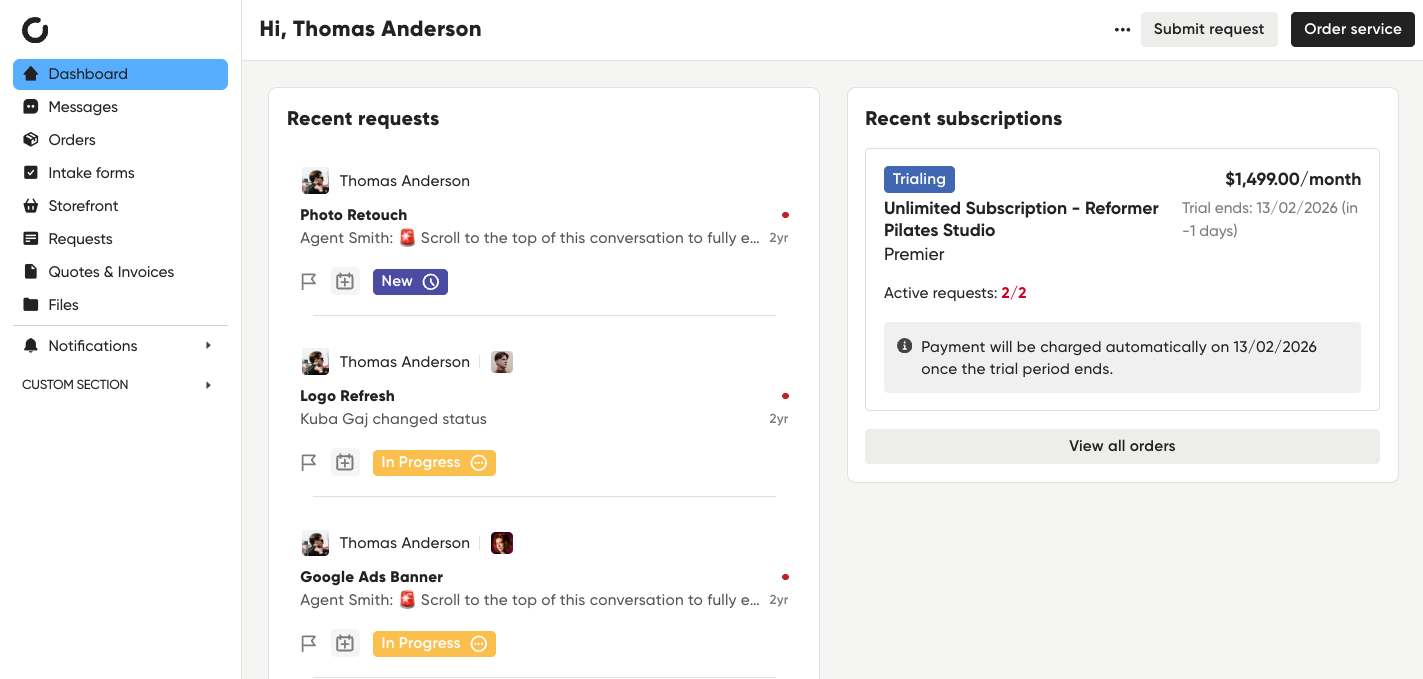
Zendo gives each client a persistent dashboard, then organizes delivery through requests with intake, files, status, chat, and checklists. Choose it when the request queue should run delivery. Choose Wayfront when native client referrals and connected reseller workspaces matter more than a request-first workflow.
Choose Zendo when
Requests should run delivery
Choose Zendo when the storefront, dashboard, and request conversation should stay at the center of client work.
Choose Wayfront when
Growth stays on the paid account
Choose Wayfront when the agency wants native referrals and reseller workspaces beside services, support, and repeat purchases.
The operating difference in 3 parts
-
Communication model
Zendo: clients have a persistent dashboard, while delivery conversations and actions stay close to each request. Zendo also uses request-specific email addresses.
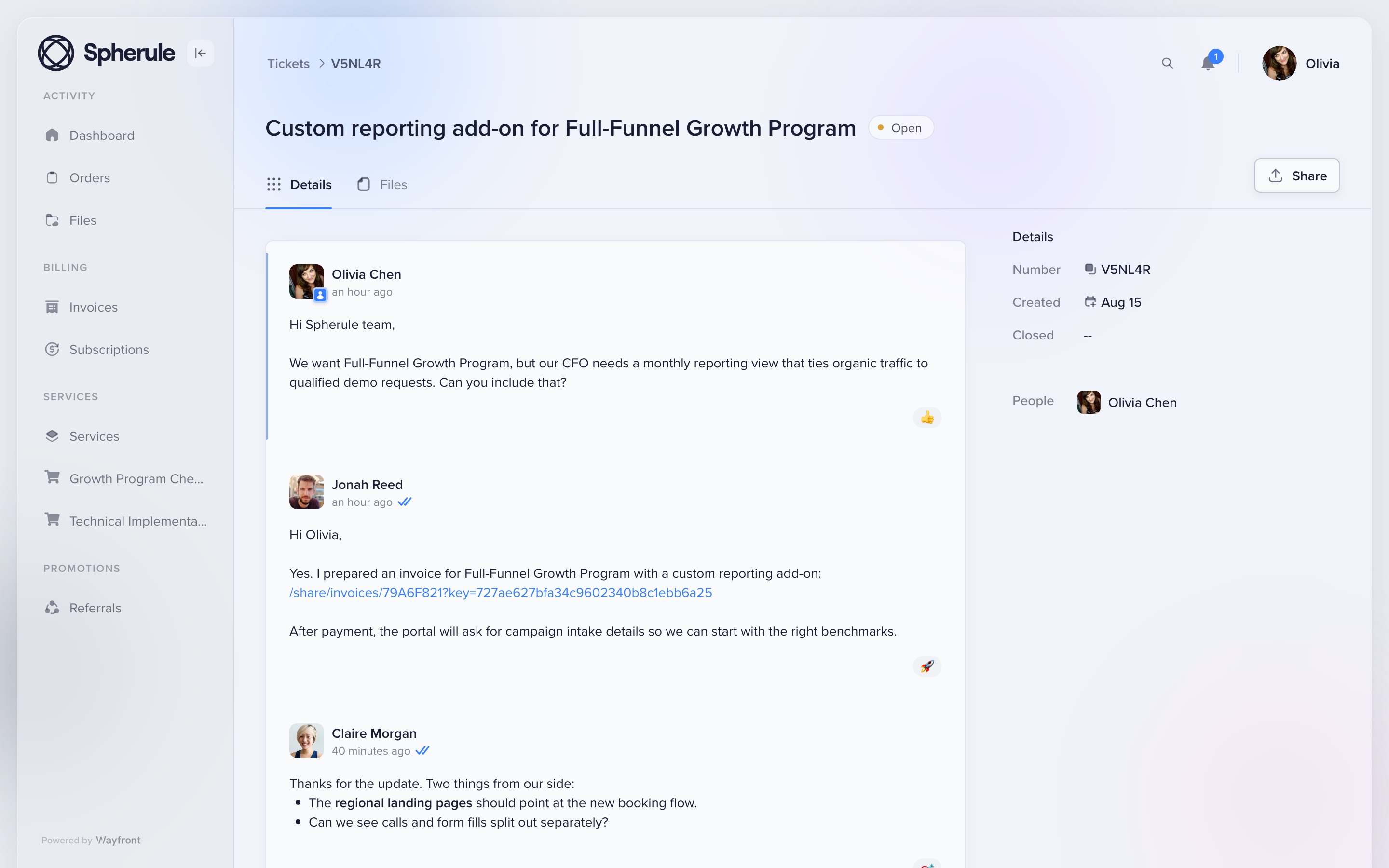
Wayfront: email replies can return to the correct order, ticket, and client record, so clients can move between the portal and their inbox.
-
Portal control
Zendo: branding, domains, CSS, and JavaScript can shape the request-based experience on the relevant plans.
Wayfront: Wayfront Pro lets agencies edit the source templates and structure behind the client-facing experience.
-
Account growth
Zendo: supports repeat orders and connects Rewardful or Tapfiliate for affiliate tracking. Those programs require a separate provider subscription.
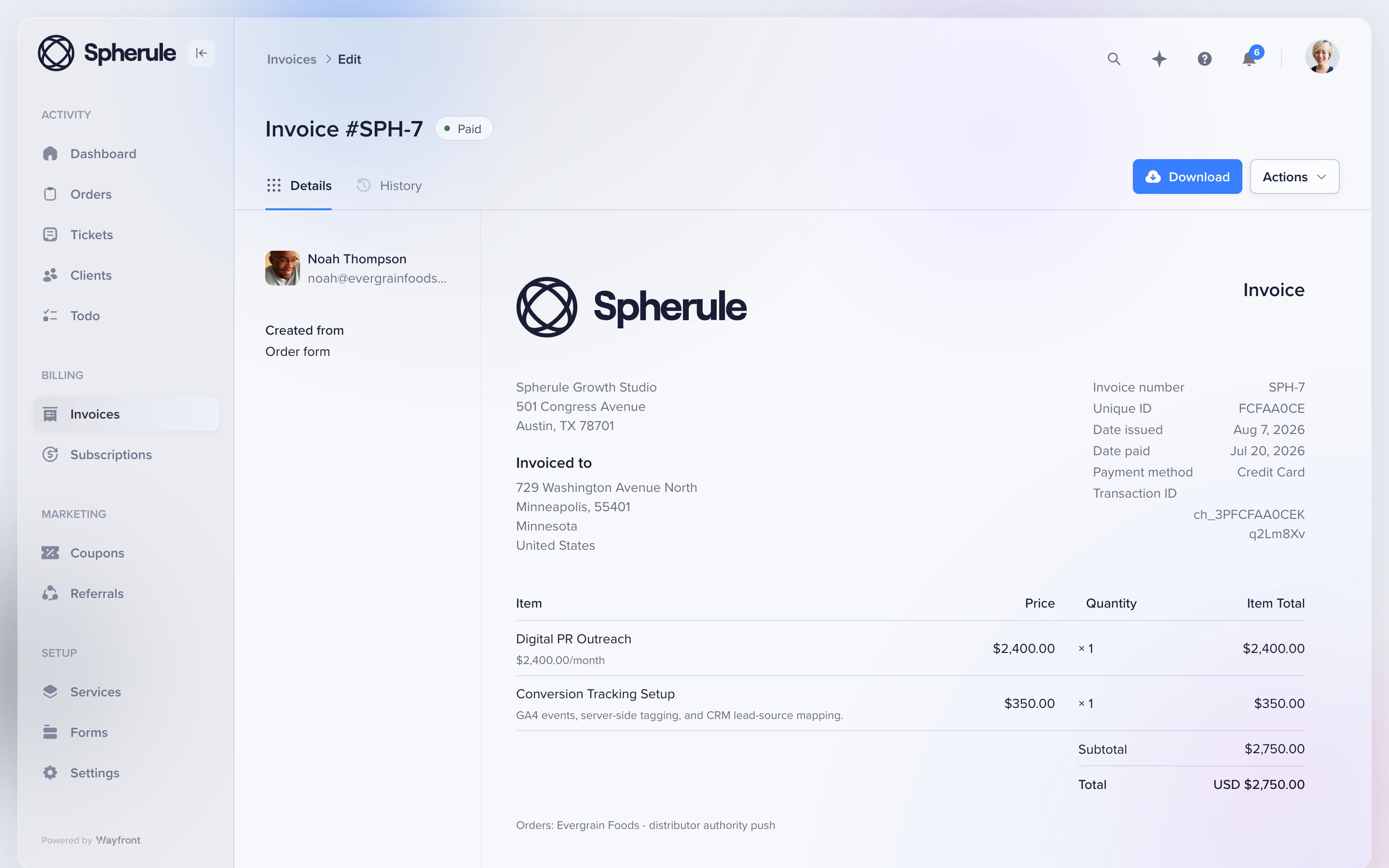
Wayfront: treats repeat purchases, native client referrals, and connected reseller relationships as parts of the paid client account.
How Wayfront runs the paid service
Wayfront keeps the portal and email as two doors into the same work. A reply can become a ticket or land on the correct order thread.
Wayfront is the wrong choice when every job should live as a request thread, or when you already run affiliate tracking in Rewardful or Tapfiliate and want to keep it there. Keep that stack if it already works.
Full field guide: how Wayfront runs the paid service account.
The other 4 Zendo alternatives
Assembly
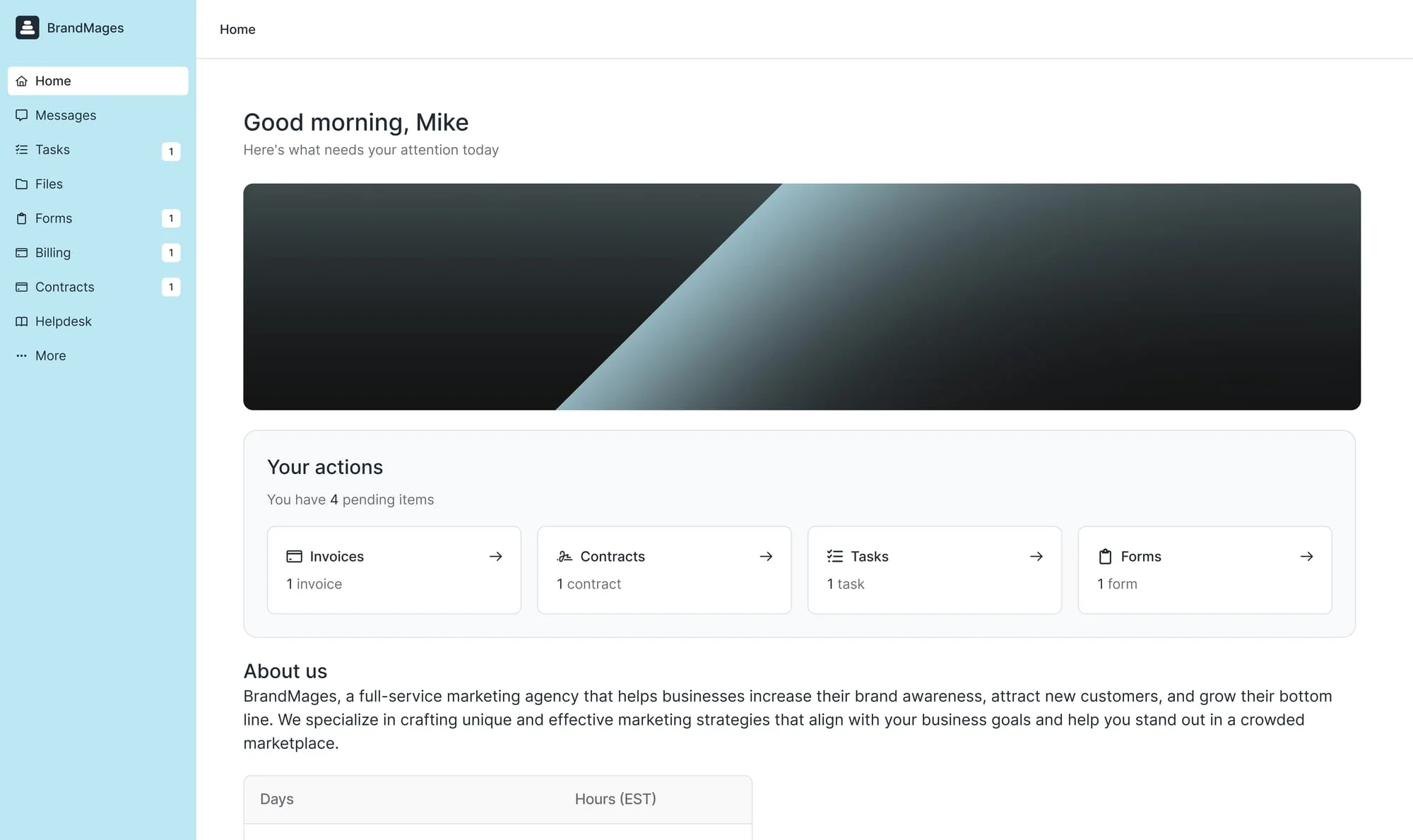
Assembly starts with a configurable client workspace. Full page: Assembly alternatives.
Agency Handy
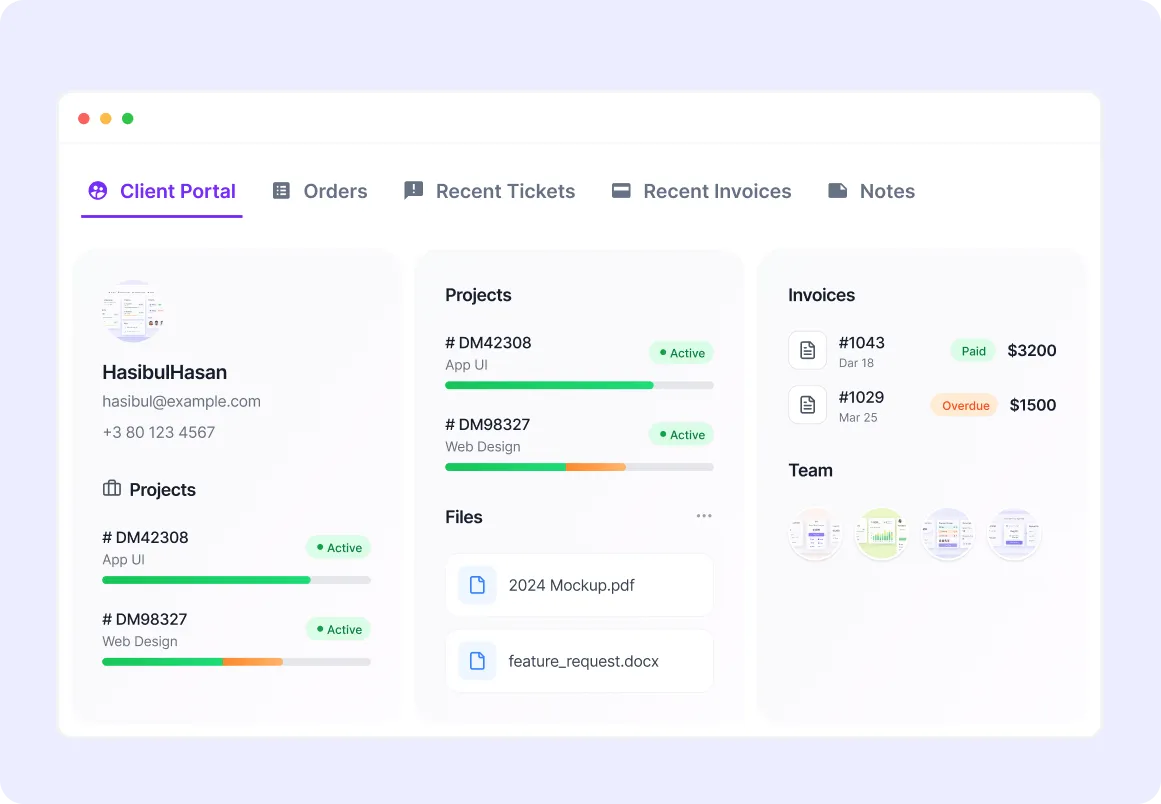
Agency Handy joins the portal with CRM, projects, tasks, billing, files, and support. Full page: Agency Handy alternatives.
SuiteDash
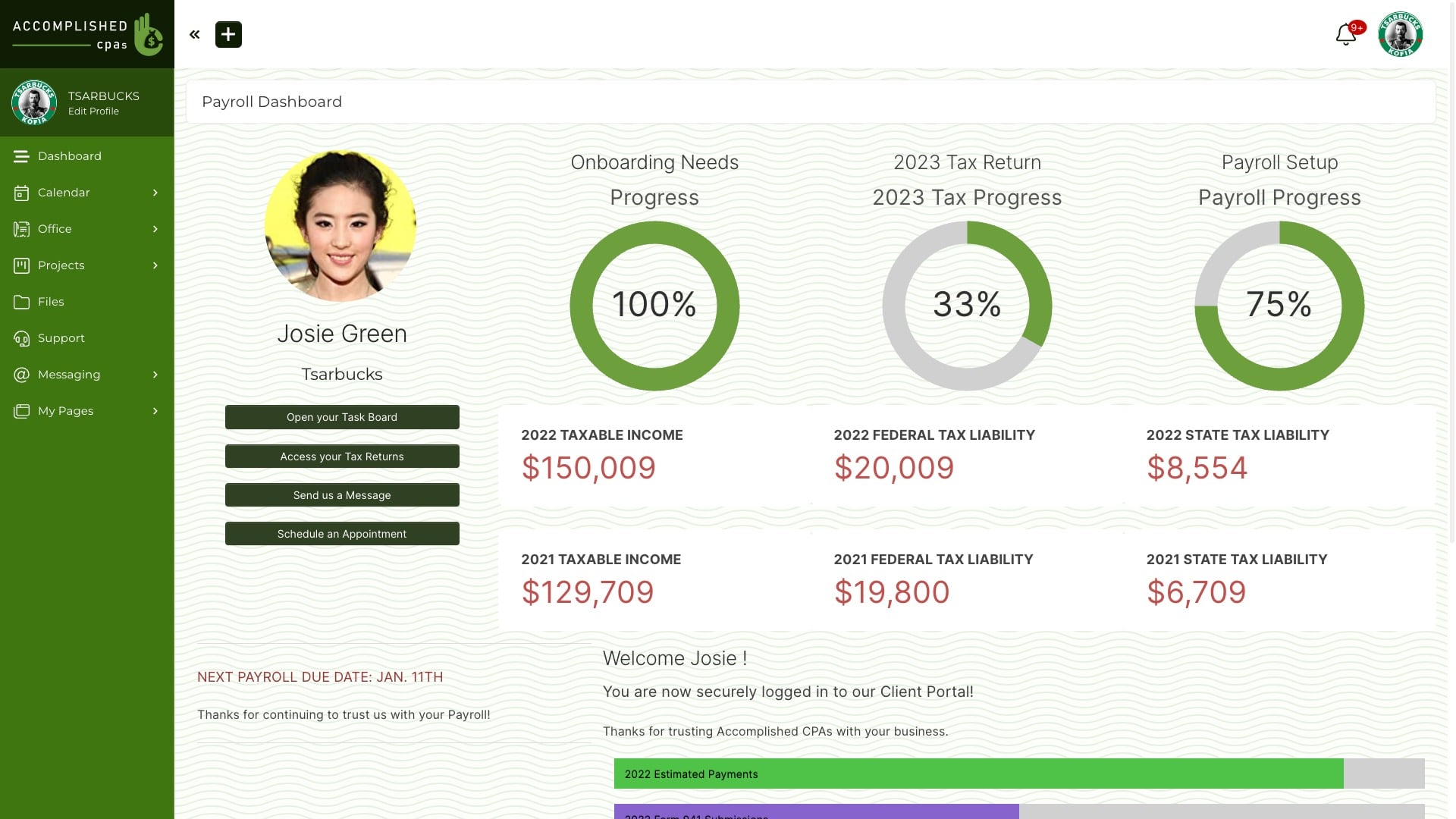
SuiteDash is a broad back office. The team owns the connections. Full page: SuiteDash alternatives.
Clinked
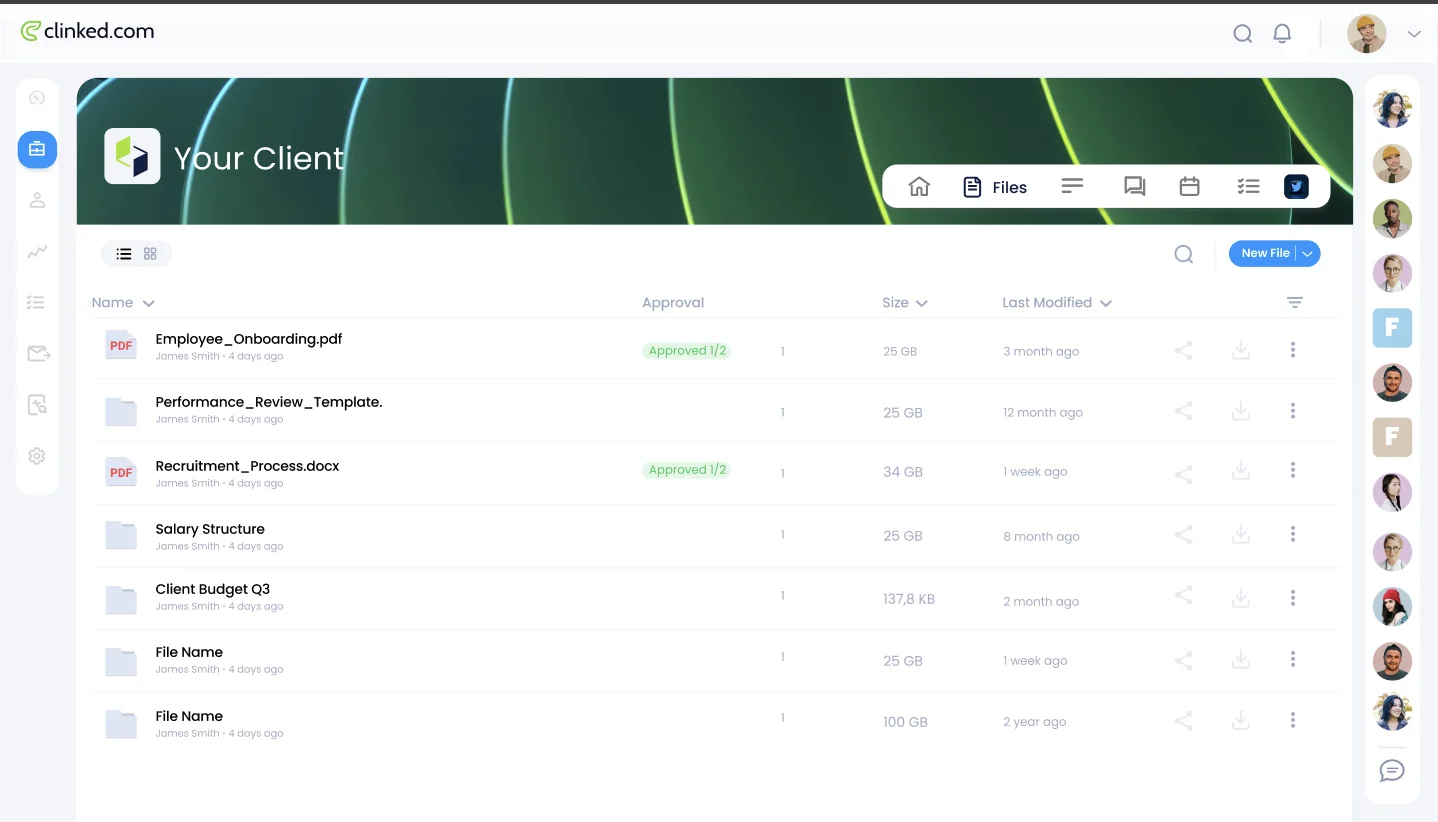
Clinked is organized around secure client workspaces. The service purchase stays a separate concern. Full page: Clinked alternatives.
3 tests before you replace Zendo
Buy the same real service
Use the same scope, price, options, and intake. Confirm a client can order without a request thread if that is how you sell.
Deliver one awkward request
Change scope, add a file, reply from email, ask for support, and issue a refund. Check which record keeps the history.
Sell the next service
Ask the same client to buy again, renew, or refer a buyer. If referral tracking needs Rewardful or Tapfiliate, include that cost in the test.
Move one request-based service first
Move one active request-based service first. Recreate its checkout, intake, client communication, and repeat-purchase path, then invite the clients who are currently using it.
Methodology
Zendo product, pricing, request, branding, and integration documentation reviewed August 2026. Public review profile: Zendo on G2.
Frequently asked questions
Which stack should replace Zendo if you sell packages?
Keep Zendo when the request thread should run delivery. Move when the next purchase, a referral, or a reseller order should sit on the paid account. Wayfront is built for that. Assembly, Agency Handy, SuiteDash, and Clinked cover apps, an ops suite, a toolkit, and a file room.
What should I test before replacing Zendo?
Use one service and one real client. Test the first purchase, an awkward delivery request, a second purchase, and every payment or message that must move between tools.
Do I need to move everything out of Zendo?
Keep Zendo for the job it handles best. Move one paid service first, give each system a clear job, and remove the old path only after a full billing and delivery cycle works.
Which work should stay in my CRM or project tool?
Keep leads, custom proposals, deep task planning, workload, time, and resource schedules in the tools built for them. Move the repeatable service, purchase, intake, client updates, support, and repeat sale only when those jobs belong together.
See the service-to-delivery path
Wayfront keeps the purchase, intake, delivery, and next sale on the same client account.
Build your workspace